
Article by
Aaisha
A passionate content writer at PYQKosh focused on simplifying Current Affairs and PYQs for competitive exam aspirants. I love turning complex topics into easy, student-friendly content that helps learners prepare smarter and stay consistent in their exam journey.
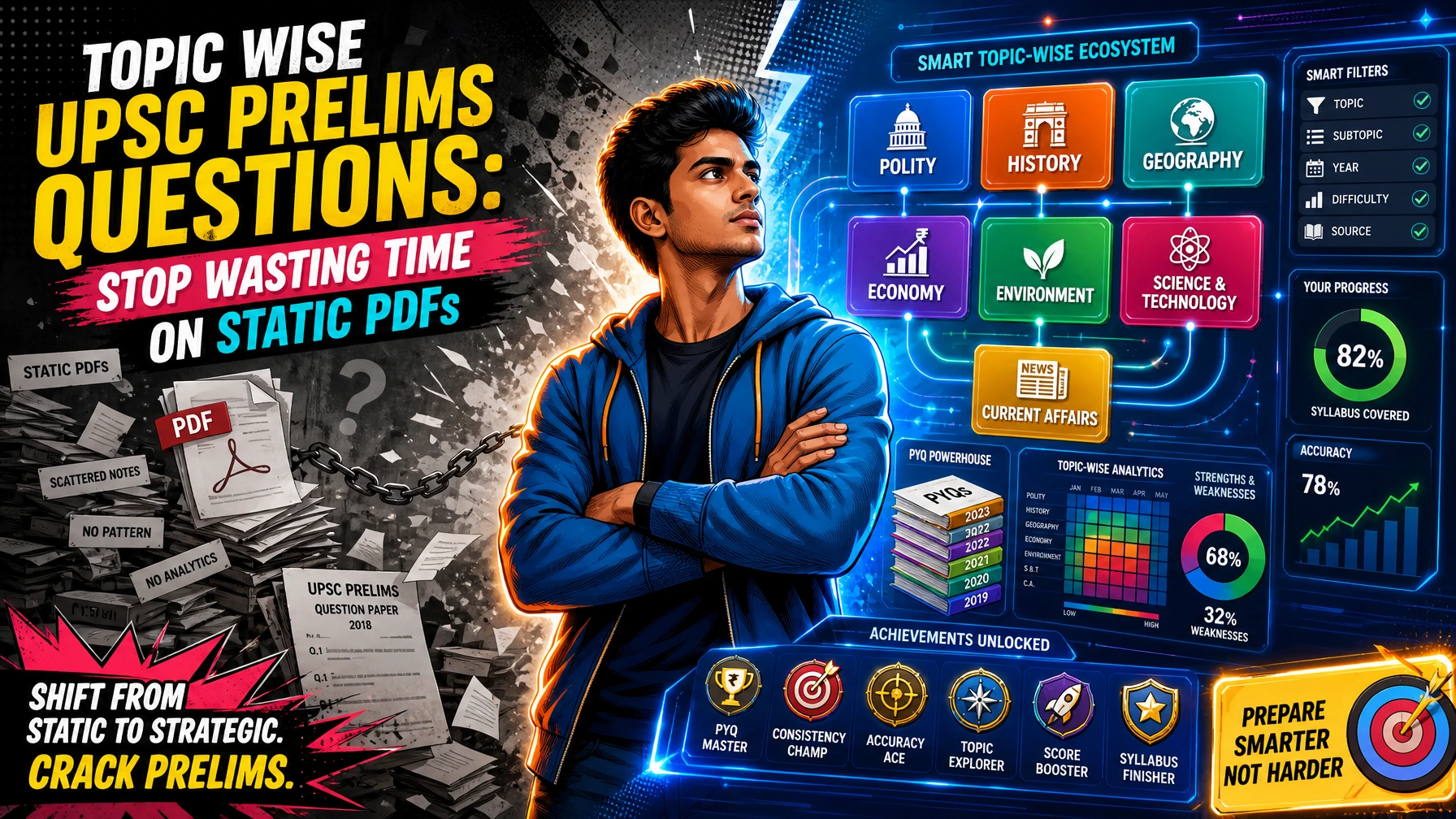
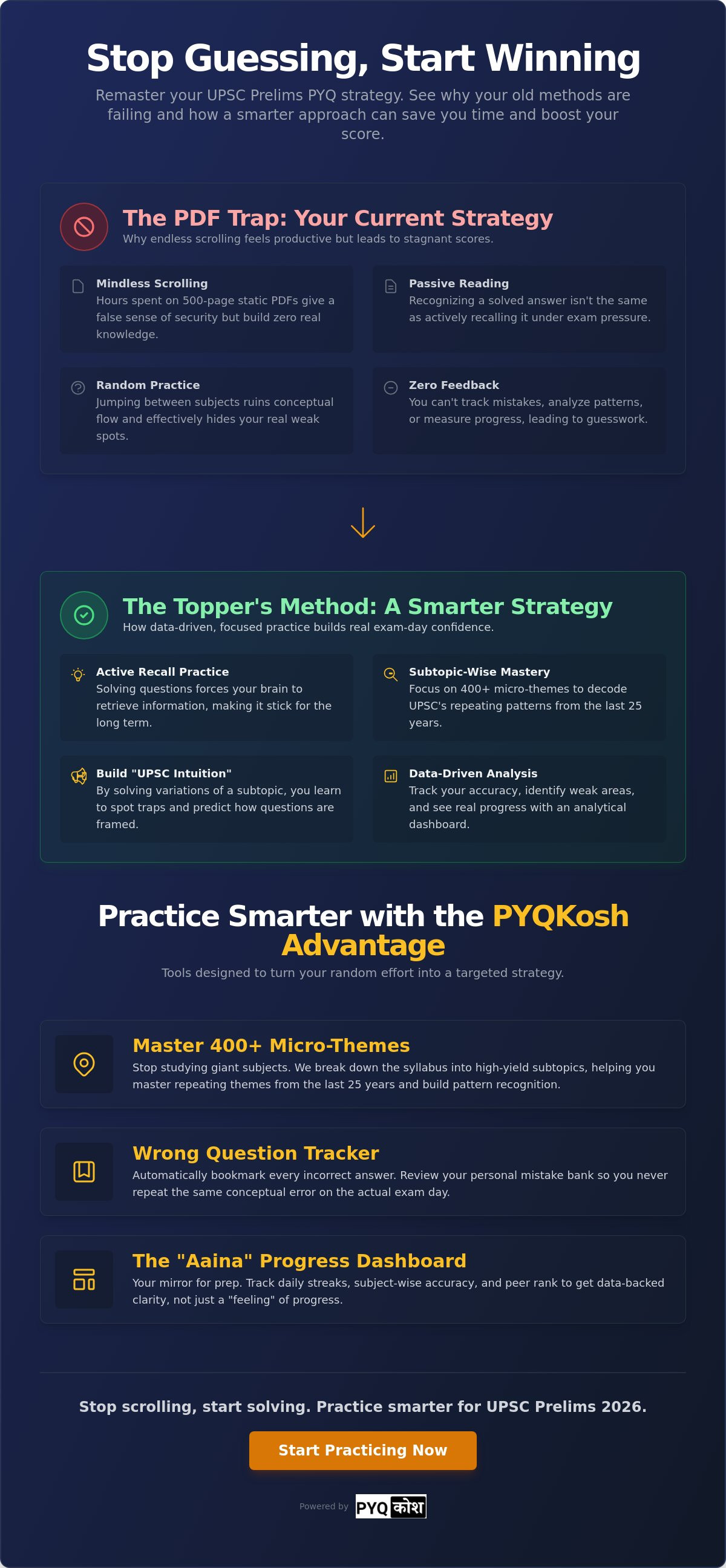
Why are you still scrolling through that 500-page static PDF? You spend three hours solving questions but still feel clueless when a mock test throws a curveball. It's time to admit that just scrolling through topic wise upsc prelims questions isn't enough if you aren't digging into the subtopic DNA.
I get it, yaar. It feels like you're drowning in data but starving for actual insights. You finish a subject but have no idea if you're actually ready for the real exam. This happens because static files don't show your weak spots or help you build the "UPSC intuition" needed for Prelims 2026.
You'll learn how to identify repeating themes from the last 25 years and track your accuracy at a micro-level. I'll explain how to use tools like the Aaina dashboard and the wrong question tracker to stop the guesswork. Let's turn your random effort into a targeted strategy that actually saves you study time.
Key Takeaways
- Stop wasting time scrolling through 500-page PDFs that offer zero feedback; active recall is the only way to make concepts stick.
- Master the art of decoding UPSC's DNA by practicing topic wise upsc prelims questions broken down into 400+ micro-themes.
- Learn why "reading" PYQs is a trap and how analyzing right and wrong options helps you predict future high-yield themes.
- Use the "Wrong Question" tracker to automatically catch your recurring mistakes so you don't repeat them on exam day.
- Track your daily streaks and peer rank using the Aaina dashboard to stay disciplined and see exactly where you stand.
Why Your UPSC Prelims PYQ Strategy Might Be Failing You
You have spent hours scrolling through that 500-page PDF, haven't you? It feels like you're working hard. You see a question, check the answer, and think "I knew that." But when you open a fresh mock test, your mind goes blank. This is the PDF trap. It gives you a false sense of security while you're actually just wasting time, yaar.
Scrolling is not studying. It is just eye movement. The UPSC Civil Services Examination demands deep retrieval, not just recognition. When you use static files, you're practicing passive reading. You need active recall to survive the pressure of the exam hall. If you want a topper banne ka shortcut, stop reading and start solving.
Random practice is another silent killer. Jumping between subjects like a ping-pong ball ruins your conceptual flow. One minute you're in Ancient History, the next you're in Environment. Your brain never gets to see the "Subtopic DNA" because you aren't looking at topic wise upsc prelims questions in a structured way. You're just guessing, not analyzing.
The Illusion of Competence in UPSC Prep
When you see a solved answer, your brain tricks you. It says "I knew that" even if you didn't. This is the illusion of competence. You only "know" it because the answer is right there on the page. Random practice makes this worse because you never stay on one theme long enough to realize you've misunderstood a core concept.
This is why your mock scores stay low despite "finishing" the whole PYQ book. You aren't catching your mistakes. Using the Aaina dashboard on PYQKosh helps break this cycle. It shows you exactly where your accuracy dips, turning that "feeling" of progress into actual, data-backed clarity. Stop lying to yourself and start tracking your real performance.
Transitioning from Subject-wise to Subtopic-wise
Don't just study "Economy." That is too big and scary for your brain to handle. Instead, focus on "Money Multiplier" or "Banking Reforms." Breaking the syllabus into 400+ micro-themes makes your preparation manageable and fast. When you solve 10 variations of the same subtopic at once, you start seeing the patterns.
This micro-focus helps you build "UPSC intuition." You begin to predict how the examiner might twist a statement. It is much easier to master 20 micro-topics than one giant subject. Here is how you can start today:
- Pick one specific subtopic like "Preamble" or "Inflation."
- Solve every PYQ related to that subtopic from the last 25 years.
- Check the in-depth explanations to understand why the other three options were wrong.
- Use a wrong questions tracker to bookmark concepts that still confuse you.
Focusing on the Subtopic DNA is the only way to move from disorganized chaos to focused mastery. It saves you time and ensures you actually remember what you study. Stop drowning in PDFs and start practicing with purpose.
The Magic of Subtopic-Wise UPSC Prelims Questions
What if I told you that the secret to clearing Prelims isn't about finishing the whole Laxmikanth or Spectrum? It's about mastering themes. We've broken down the entire syllabus into 400+ micro-themes. Instead of just studying "Polity," you focus on "Preamble" or "Article 21." This is the core of practicing topic wise upsc prelims questions. While you can find Official UPSC PYQs on the government site, they are raw and unorganized. You need a way to see the patterns, not just the questions.
Subtopic practice turns you into a detective, yaar. You start seeing how UPSC asks about "Money Multiplier" or "Eco-Sensitive Zones" every few years. This builds pattern recognition for 2026. For Hindi-medium aspirants who often juggle work or have limited study time, this method is a total life-saver. You don't need to read everything. You just need to master the micro-themes that actually appear in the exam. It's the ultimate topper banne ka shortcut.
Structured, analytical exam preparation helps you find your "weakest link" before the actual exam day. Maybe you're great at Modern History but keep failing at "Temple Architecture." Data-driven prep shows you this gap immediately. You can check your accuracy on the Aaina dashboard to see exactly where you stand. This clarity reduces anxiety because you aren't guessing anymore; you're following a plan.
Building Your UPSC Intuition
If you solve 15 questions specifically on the "Preamble," your brain starts to "feel" the UPSC language. When you see the 16th question in 2026, you'll guess it right even if you're slightly unsure. Why? Because you've spotted the "distractor" options UPSC loves. They often swap "Socialist" and "Secular" or play with the dates. Subtopic practice is the fastest way to decode this language and build that famous "UPSC intuition" everyone talks about.
Why Toppers Swear by This Method
Toppers don't work harder; they work smarter. By focusing on high-yield subtopics, they finish the syllabus 2x faster than someone reading cover-to-cover. This structured approach kills exam-day anxiety. You enter the hall knowing you've mastered every micro-theme that matters. If you want to go even deeper into this strategy, read our guide on Mastering the Prelims UPSC Question Paper. It breaks down how to handle the actual paper on the big day. Mastering topic wise upsc prelims questions is your foundation, but knowing how to apply it is what gets you the rank.
Stop guessing and start tracking your progress at the subtopic level to see real improvement.
Myth vs. Reality: Why "Reading" PYQs Won’t Help You Clear Prelims 2026
I see so many aspirants sitting in libraries just reading through solved papers like they are novels. It feels productive, but it's a trap, yaar. If you don't struggle with the question first, your brain won't bother storing the information. Reading an explanation is passive; solving a question is active. That is the difference between failing by two marks and clearing the cutoff.
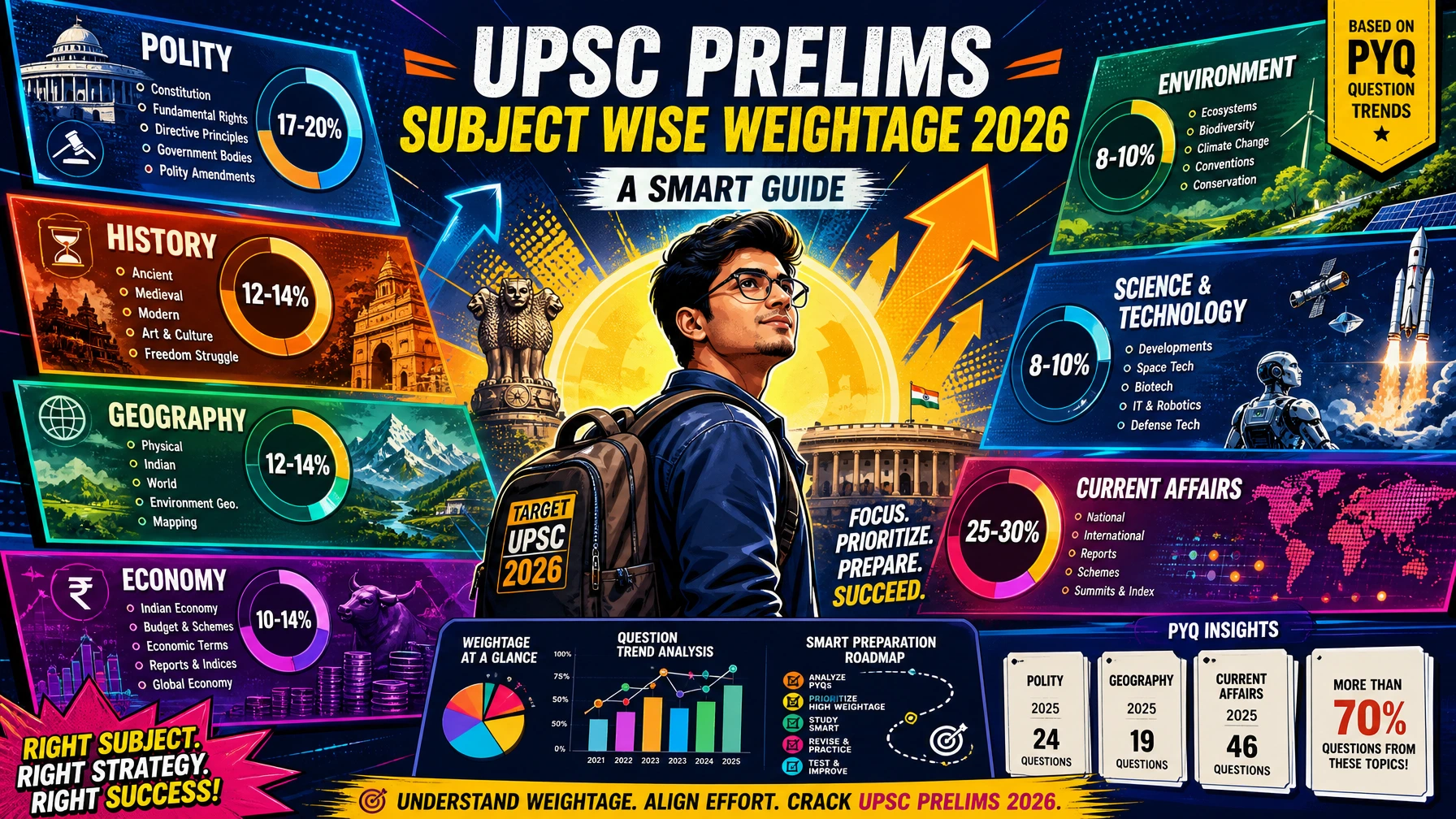
Many believe the myth that UPSC never repeats questions. While they don't copy-paste, they absolutely repeat core concepts. If you only look at official UPSC question papers year-by-year, you miss the pattern. But when you switch to topic wise upsc prelims questions, the repetition becomes obvious. You start seeing the same themes disguised in new language every single year.
Another big myth is that you need 30 years of questions to be safe. Reality check: Quality beats quantity every time. Analyzing the last 15 years deeply is better than skimming 30 years. You need to understand why the wrong options were there in the first place. This deep analysis is what builds your "UPSC intuition" and helps you eliminate options like a pro.
Decoding the "Repeat" Mystery
Themes like "Buddhism and Jainism" are a goldmine. They appear almost every year. If you just read the 2018 answer, you might learn one fact. But if you practice the entire subtopic, you see how a 2018 question on "Fundamental Rights" evolved into a complex statement-based question in 2024. Practicing the subtopic prepares you for the evolution, not just the past.
This is why toppers don't just "read" PYQs. They use them to find the "Subtopic DNA." By solving 10 questions on the same theme back-to-back, you notice the specific keywords UPSC uses to confuse you. This is the real topper banne ka shortcut that most coaching institutes won't tell you directly.
The Problem with Year-Wise PDFs
Year-wise papers have their place, but only as final mock drills in the last month of prep. Using them for daily study is a mistake. Jumping from a History question to a Science question in one PDF ruins your focus. It prevents your brain from building a structured mental map of a single subject.
To really understand how to use these patterns, check out our guide on UPSC PYQ. It explains why subtopic-wise practice is the hidden secret to clearing Prelims 2026. Stop being a passive reader and start being an active solver. Your rank depends on how much you struggle with the questions today, not how many PDFs you "finish" reading.
Use the wrong questions tracker to catch your mistakes early and ensure you never repeat them in the actual exam.
How to Master High-Yield Themes for UPSC 2026
You have the tools, now let's build the habit. Mastering topic wise upsc prelims questions is not a one-time task; it is a five-step cycle. Start by picking a tight subtopic like "Money Multiplier" or "Governor General." Solve every single question from that micro-theme. This builds a mental map that a giant subject-wise PDF simply cannot provide.
The next step is the most important: don't just move on after a test. Use the wrong questions tracker to see exactly where you tripped. Was it a factual error or a conceptual gap? Sorting your mistakes by frequency helps you see which traps you fall into most often. This is the real topper banne ka shortcut, yaar.
Analyze the "Why" behind every wrong choice. Our in-depth explanations don't just give the answer; they explain the confusion points. Check your accuracy on the Aaina dashboard. If you hit 80% accuracy in "Preamble," move on. If you're at 40% in "National Parks," you know exactly where your Sunday revision needs to happen.
Turning Mistakes into Marks
The Wrong Question tab is your best friend. It automatically stores every mistake so you don't have to maintain a bulky register. You can sort these by "recently committed" to refresh your memory fast. It stops the "same mistake twice" syndrome that kills so many Prelims dreams.
Pay close attention to the Booster Tips in the explanations. These are bite-sized nuggets of high-yield info designed for quick recall. Instead of making long notes, just bookmark the tough questions. Re-practicing your Bookmarked tab every Sunday ensures those difficult concepts stay fresh in your mind.
Identifying Your Strengths and Weaknesses
Don't let a low score in a tough subject scare you. A 60% accuracy in Ancient History is actually a great sign because of how tricky those questions are. The Aaina dashboard helps you read your progress graph without feeling overwhelmed. It turns your anxiety into a structured plan of action.
Stop guessing which subjects to study next. Use data to drive your preparation and focus only on the themes that need work. For a clear roadmap, follow the UPSC CSE Practice Plan to master every high-yield subtopic systematically. This structured, analytical exam preparation is what separates the serious aspirants from the crowd.
Start your daily practice streak today on the PYQKosh dashboard to see your accuracy climb.
Practice Smarter with the PYQKosh Advantage
Static PDFs are dead weight in your preparation. They cannot tell you if your accuracy is improving or how you compare to thousands of other serious aspirants. This is where PYQKosh changes the game by bringing topic wise upsc prelims questions into a structured, analytical environment. You no longer need to hunt for scattered resources across ten different websites.
The Aaina dashboard acts as your personal mirror. It tracks your daily practice streaks and shows your peer rank in real-time. Seeing your progress as a weekly graph turns the boring grind into a visible journey of growth. If you are serious about Prelims 2026, you need to know exactly where you stand every single day, not just after a mock test.
Our subtopic-wise test analysis goes deeper than any PDF ever could. It tells you exactly which micro-theme cost you marks. You can practice in "Practice Mode" to learn from in-depth explanations or switch to "Test Mode" to build the speed required for the actual exam hall. This flexibility ensures you master the content before you test your nerves.
Made by an Aspirant, for Aspirants
We understand the 11 PM struggle because we have been there, yaar. PYQKosh follows a "no-nonsense" approach. There are no distracting videos or long theory notes to waste your time. It is pure, high-quality practice designed to help you clear the cutoff. Our platform feels like a peer-to-peer guide rather than a detached corporate app.
The Bookmark tab is a powerful tool for your final revision. Instead of re-solving everything, you can create your own "personalized tough paper" by bookmarking questions that stumped you. You can sort these by subject or even subtopic level. This ensures your last-minute revision is focused only on your actual weak spots, not the stuff you already know.
Your 2026 Roadmap Starts Here
Consistency is the only real topper banne ka shortcut. Integrate a 2-hour revision routine into your daily schedule using our platform. Start with one subtopic, solve the PYQs, and check your Aaina dashboard. Maintaining daily streaks will keep you motivated during the long 1-year journey toward the UPSC CSE Prelims.
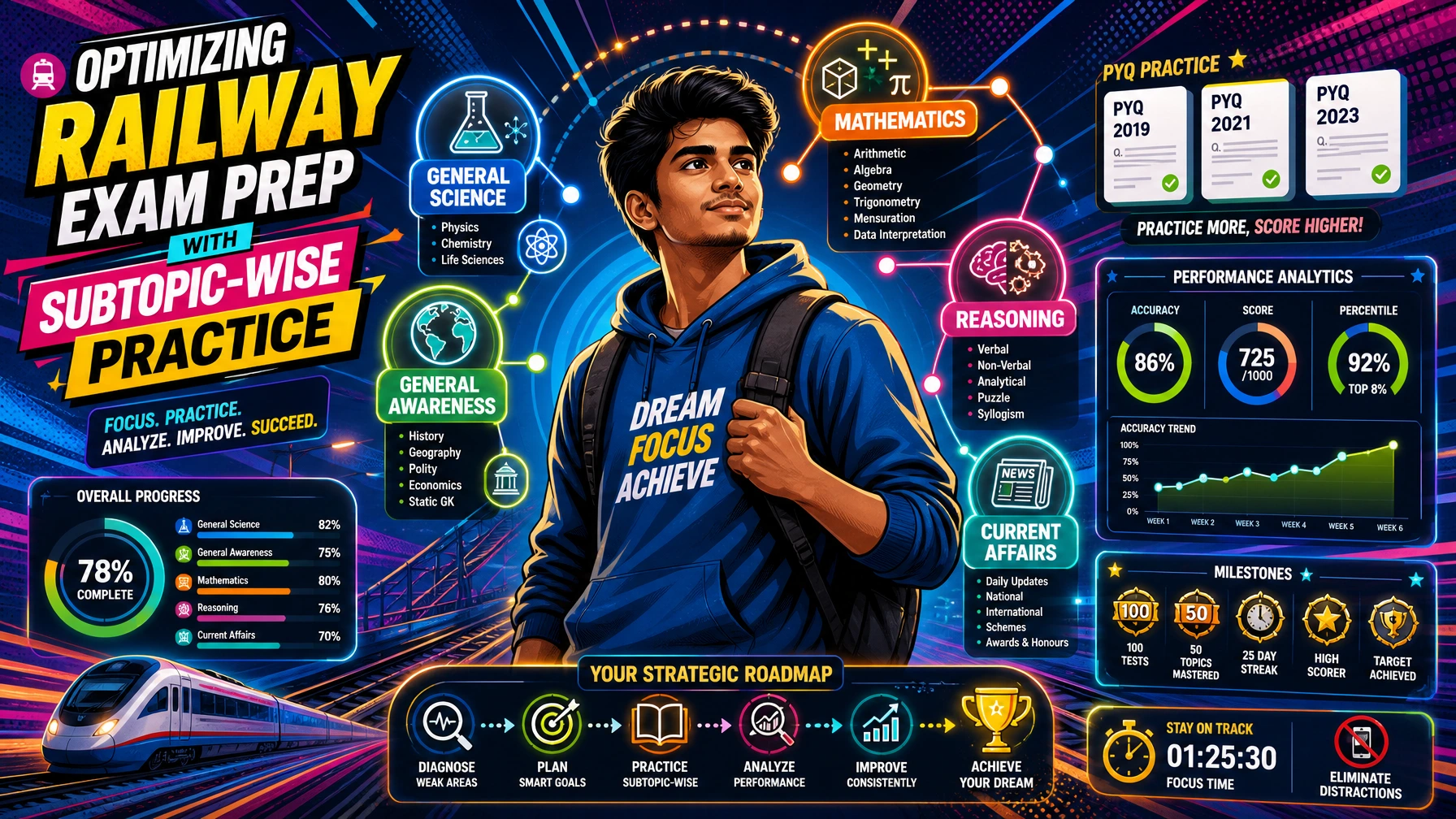
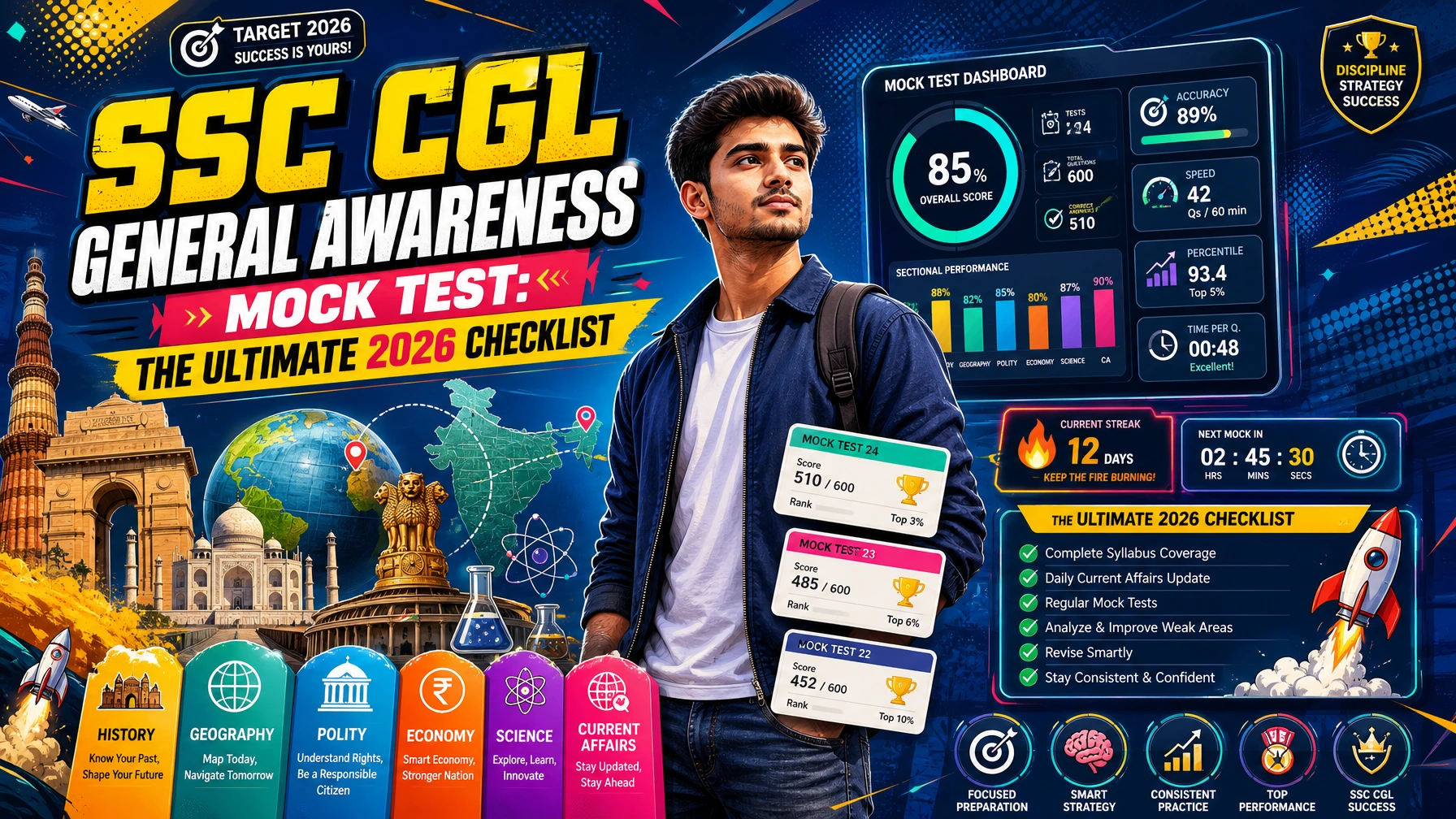
Moving from "thinking" to "doing" is what separates winners from dreamers. Stop scrolling through endless question banks and start analyzing your performance at the micro-level. With multi-exam support for UPSC, SSC, and Railway exams, you have a centralized destination for all your PYQ needs. Your roadmap to success is now data-driven and focused.
Open your dashboard and solve your first set of subtopic-wise questions right now.
Your Path to UPSC Prelims 2026 Starts Now
You've seen why the old way of scrolling through heavy PDFs doesn't work. It's time to stop passive reading and start building real exam intuition. By focusing on topic wise upsc prelims questions, you turn every hour of study into actual marks on your scorecard. You aren't just finishing a syllabus; you're mastering the themes that UPSC loves to repeat.
With over 100,000 questions across UPSC, SSC, and Railway exams, you have everything you need in one centralized destination. Use the Aaina Progress Dashboard to track your accuracy in real-time and rely on our in-depth explanations to clear every doubt. No more scattered resources or the frustration of making the same mistake twice in your mock tests.
You have the strategy and the right tools in your hand. Now, you just need to show up for your dream every single day. Stop scrolling and start winning; practice topic-wise UPSC prelims questions on PYQKosh today. You've got this, yaar!
Frequently Asked Questions
Is it enough to solve only topic-wise UPSC Prelims questions for 2026?
No, yaar, topic-wise practice is your foundation, but you also need full-length mocks to build exam-day stamina. Start by mastering topic wise upsc prelims questions to clear your concepts first. Once you hit high accuracy in all subtopics, switch to full-length tests to learn time management under pressure.
How many years of UPSC PYQs should I practice subtopic-wise?
Practicing the last 25 years of questions is the gold standard for decoding UPSC's DNA. While the exam format changes, core themes in Polity and Geography remain consistent over decades. Focusing on this long-term data helps you spot "distractor" options that have been used since the early 2000s.
Can I clear UPSC Prelims 2026 by only practicing questions without reading books?
Strictly speaking, no, because you need basic theory to understand the logic behind the answers. Think of books as the "what" and PYQs as the "how." Use your standard textbooks for the first reading, then immediately jump into topic wise upsc prelims questions to see how that theory actually appears in the exam.
How does the Wrong Question tracker in PYQKosh help in revision?
It automatically saves every mistake you make so you don't have to maintain a manual error log. You can sort these by frequency to see which concepts you keep forgetting. This turns your revision into a targeted strike on your weaknesses instead of a random walk through your notes.
Why is subtopic-wise practice better than solving full year-wise papers?
Year-wise papers force your brain to jump between History, Science, and Economy, which kills deep focus. Subtopic practice allows you to solve 15 variations of the same concept back-to-back. This builds pattern recognition that helps you guess the next question correctly even if you're slightly unsure of the facts.
Does UPSC repeat questions from other exams like CDS or CAPF?
Yes, UPSC often tests the same themes across different exams they conduct. A theme appearing in CDS might show up in the Civil Services Prelims a year later with more complexity. Practicing multi-exam PYQs gives you a massive advantage in spotting these emerging high-yield topics before others do.
How can I track my progress if I am practicing from multiple sources?
Tracking progress across multiple sources is a nightmare and usually leads to disorganized chaos. It's better to use a centralized platform where your accuracy and streaks are logged in one place. Features like the Aaina dashboard give you a clear weekly graph so you can see if your hard work is actually producing results.
Is the Aaina dashboard available for Hindi medium aspirants too?
The Aaina dashboard is designed to be simple and intuitive for everyone, regardless of their medium. It uses clear data visualizations like accuracy percentages and peer rankings. Hindi medium aspirants find it especially helpful for staying disciplined and tracking their daily streaks throughout the long 1-year journey.