

Article by
Aaisha
A passionate content writer at PYQKosh focused on simplifying Current Affairs and PYQs for competitive exam aspirants. I love turning complex topics into easy, student-friendly content that helps learners prepare smarter and stay consistent in their exam journey.
Most aspirants treat a railway previous year question paper like a random checklist. That’s exactly why they get stuck at the same score for months without seeing any real progress.
You’ve likely spent hours drowning in 500-page PDFs, only to repeat the same mistakes in every mock test. It’s exhausting when you don’t know which subtopics actually carry the highest weightage for the 2026 recruitment cycle.
I’m here to help you stop the guesswork and start winning. We’ll master the art of solving PYQs with a subtopic-wise approach that turns raw papers into a clear roadmap for your success.
This strategy will help you finish the syllabus faster and boost your accuracy. You’ll finally feel confident that you’re studying the right topics to grab one of the 22,195 Group D vacancies or a spot in the Technician and ALP cadres.
Key Takeaways
- Learn why the RRB repeats core concepts across different shifts and how you can spot these patterns to predict future questions.
- Shift from random practice to a targeted strategy using a railway previous year question paper to pinpoint your exact subtopic weaknesses.
- Master the “Diagnostic Test” method to evaluate your current level and prioritize the high-weightage topics that will define the 2026 exams.
- Discover how to use AI-powered performance analytics to track your speed and accuracy, turning raw data into a personalized study plan.
- Understand the recent shifts in exam difficulty to ensure your preparation matches the actual standard of the upcoming NTPC, Group D, and ALP papers.
Why Railway Previous Year Question Papers are Your Secret Weapon
Think of the RRB exam like a game of chess. You can’t just move pieces randomly and hope to win. You need to study the board’s history to predict the next move. In this case, the history is hidden inside every railway previous year question paper. The Railway Recruitment Control Board (RRCB) doesn’t reinvent the wheel for every recruitment cycle. They follow patterns. They love repeating core concepts, even if they swap the numbers or names in the question.
If you’ve looked at papers from 2018 and compared them to the 2025-2026 trends, you’ll see a massive shift. The questions have moved from simple rote memorization to conceptual depth. You can’t just “rattu-fy” facts anymore. You need to decode the “Exam Language.” This is especially true for General Science, where tricky phrasing can make a simple Newton’s law question look like rocket science. Mastering PYQs helps you stop guessing and start predicting exactly what will appear for your specific RRB zone.
The Reality of RRB Exam Patterns
General Awareness weightage has evolved significantly over the last five years. It’s no longer just about history and geography; it’s about how those topics intersect with current developments. Mathematics in Railway exams also follows a unique path. Unlike SSC or Banking, RRB math is often more calculation-heavy but follows a fixed set of formulas. If you master these variations, you’re already ahead of the crowd. Don’t forget Mental Ability. It’s your biggest score booster. It’s the section where you can score 100% accuracy if you’ve practiced the specific logic patterns RRB prefers.
Moving Beyond the PDF Fatigue
Let’s be honest. Your Telegram is probably a graveyard of 100-page PDFs that you’ll never actually open. Downloading random scanned copies is actually hurting your preparation. You spend more time scrolling through blurry pages and searching for answer keys than actually solving problems. It’s frustrating and a total waste of energy.
A centralized, organized source for your RRB NTPC and Group D preparation saves you at least 2 hours of searching every day. Instead of drowning in disorganized data, you should be focusing on structured practice. When you move from scattered PDFs to a streamlined system, you replace chaos with clarity. You’ll finally have more time to focus on your weak spots instead of hunting for the next “viral” study material.
Decoding the RRB Exam Structure: What the Papers Tell Us
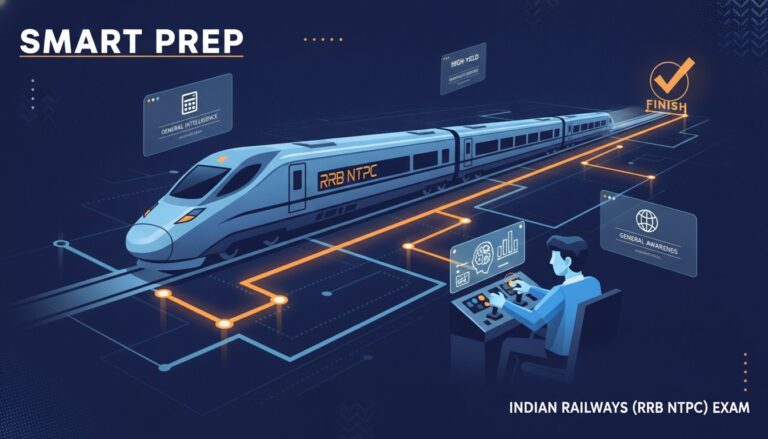
Stop treating NTPC and Group D as if they belong to different universes. While the difficulty level might shift, a deep dive into any railway previous year question paper reveals they share the same core DNA. Whether you are aiming for the 22,195 Group D vacancies or the 6,565 Technician posts, the Railway Recruitment Board follows a consistent logic across all its exams.
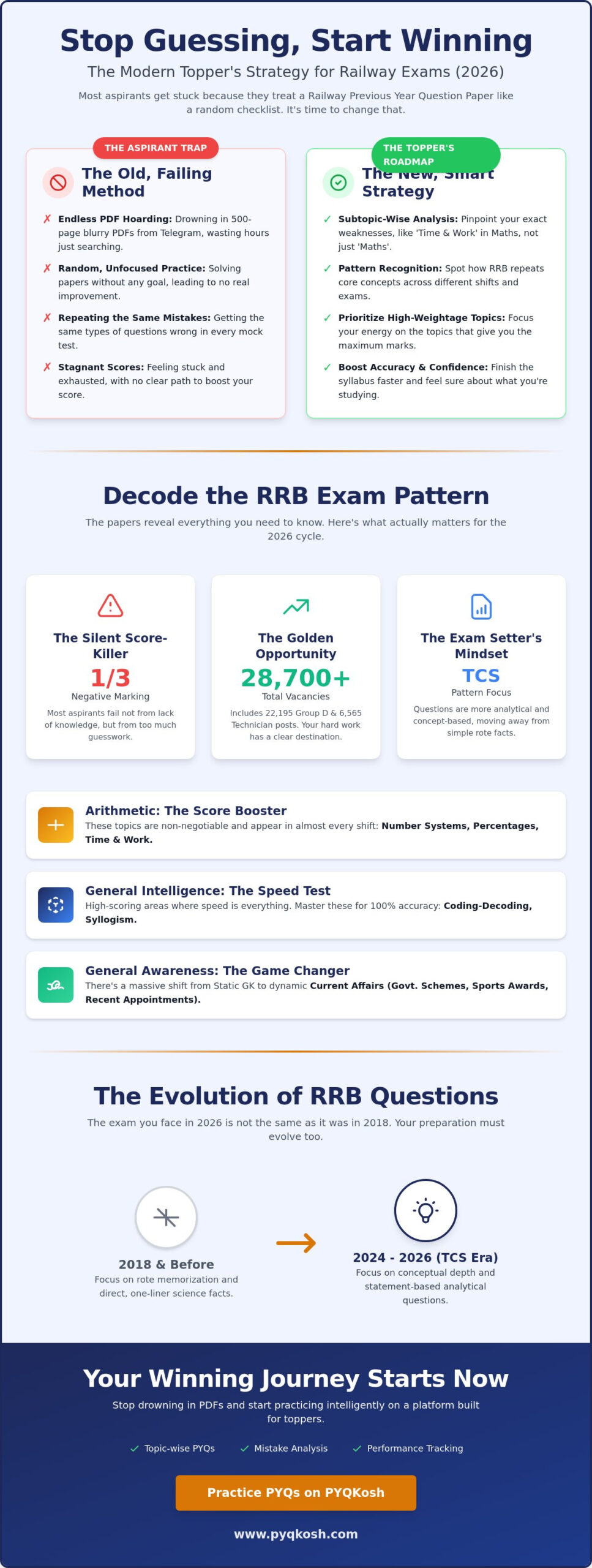
One of the biggest hurdles is the 1/3 negative marking. It’s a silent score-killer. Looking at previous year response sheets shows that most aspirants fail not because they didn’t know the answers, but because they guessed too much. You also need to ignore the “Safe Score” myth. Old cut-offs are just benchmarks; they don’t account for the changing competition in 2026. Use them to set a floor for your performance, not a ceiling.
General Science is usually the make-or-break factor. It’s where the crowd gets filtered out. While others struggle with vague textbooks, you can practice subtopic-wise PYQs to see exactly how concepts like Optics or Periodic Tables are actually tested. Always keep an eye on Official RRB Notifications to stay updated on any minor syllabus tweaks or exam dates for the 2026 cycle.
Subject-Wise Breakdown from Past Papers
General Awareness has seen a massive shift. In the 2024-2025 papers, Static GK took a backseat to dynamic Current Affairs. You need to focus on government schemes, sports awards, and recent appointments. In Arithmetic, the themes of Number Systems, Percentages, and Time & Work are non-negotiable. They appear in almost every shift. For General Intelligence, don’t overcomplicate things. Coding-Decoding and Syllogism are your high-scoring areas where speed is everything.
The Evolution of Railway Questions (2018-2026)
Since TCS started conducting these exams, the pattern has become more analytical. Gone are the days of one-liner science facts. We’ve seen a rise in statement-based questions that test your depth of understanding. If you want to stay relevant, you must practice at least the last 3 years of papers first. This helps you get used to the modern phrasing and the specific “traps” examiners set to catch unprepared candidates. Starting with the most recent 2025 papers will give you the most accurate picture of what to expect in your upcoming 2026 shift.
The Subtopic Strategy: Why Random Solving Fails
Solving a random mock test feels like progress, but it’s often a trap. You get a score, but you don’t get a solution. If you want to crack the 2026 exams, you need to change your lens. Solving a full paper tells you your current score; solving a subtopic tells you your specific weakness. This is the only way to bridge the gap between “attempting” and “clearing” the exam.
When you pick up a railway previous year question paper, don’t just solve it from question 1 to 100. Instead, pick a single topic like “Profit & Loss.” Solve every variation asked in Railway exams since 2015. By the time you finish, no new question can surprise you. You’ve seen every trick the examiner has used for a decade. This is how you build “Concept Muscle Memory.”
Time is your most precious resource. When you’re in a crunch, you can’t afford to study everything. Use subtopic-wise weightage to skip low-priority chapters. Why spend three days on a topic that appears once in five years? You can use the Railway Exam Selection tool to find your specific board’s trends and focus on what actually matters.
Bridging the Gap with Subtopic Mastery
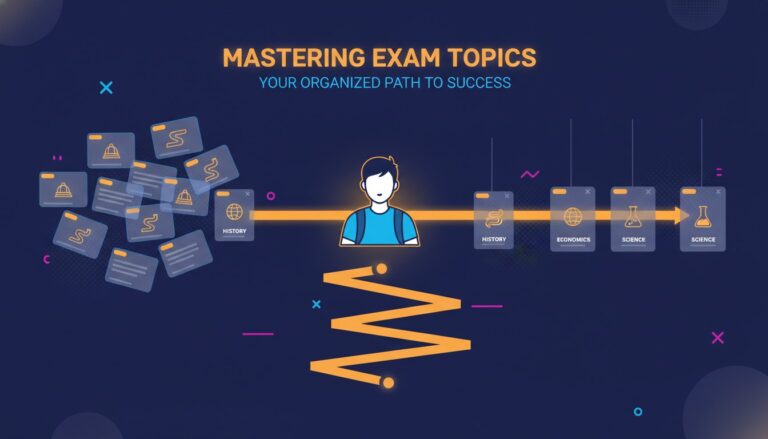
Move from broad subjects to sharp focus. Don’t just study “History.” Dive into the “Indian National Movement” specifically. Practicing 50 questions on one specific concept in one sitting is far more effective than solving 50 random questions. This targeted repetition ensures the logic sticks. You stop being a “jack of all trades” and start becoming a master of high-yield topics.
The PYQKosh Advantage: Topic-Wise Organization
We’ve organized a database of 100,000+ questions specifically for your needs. No more scrolling through messy, disorganized PDFs. You can find exactly what you need in three clicks. We’ve replaced passive reading with “Active Recall.” Our interactive practice mode forces you to think, making your preparation much faster. It’s the modern way to ensure you’re always studying the right material for your specific RRB zone.
How to Practice Railway PYQs Like a Topper
You can’t fix what you haven’t measured. Before you dive into a heavy study schedule, you need a reality check. Start your preparation with a “Diagnostic Test.” Pick up a full-length railway previous year question paper and solve it under real exam conditions. This isn’t about the score; it’s about finding your baseline. It shows you exactly where your foundation is strong and where it’s crumbling.
Once you have your results, follow the 70/30 rule. Spend 70% of your study time only on subtopics where you scored less than 50%. Most aspirants make the mistake of practicing what they already know because it feels good. Toppers do the opposite. They run toward their weaknesses. If you want a structured way to handle this, follow our RRB NTPC Practice Plan to stay on track.
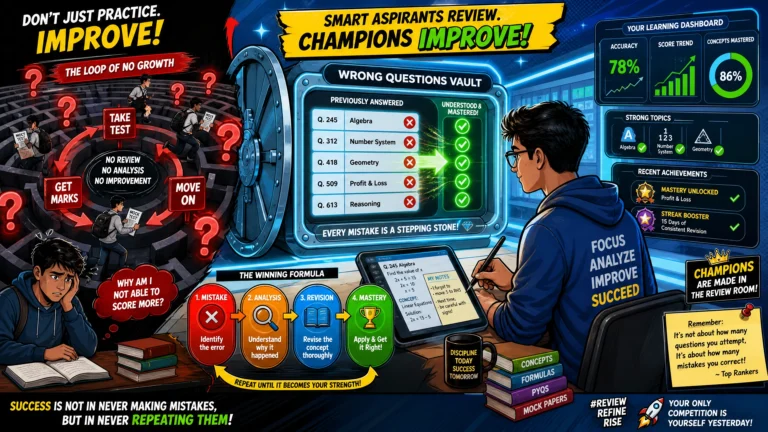
Don’t just solve questions; simulate the pressure. Use “Test Mode” to practice with a ticking clock. This builds the mental stamina you’ll need on the actual exam day. Every time you finish a session, review your wrong answers immediately. A wrong answer is a gold mine of information. It tells you exactly what you need to learn next to jump your score by 5 or 10 marks.
The 3-Step Review Process
Reviewing is where the actual learning happens. First, identify if your mistake was a “Silly Error” or a “Knowledge Gap.” If you knew the concept but messed up the calculation, you need more speed practice. Second, re-solve that specific question without looking at the answer key. Finally, practice 10 similar questions from that subtopic. This ensures that the logic is burned into your brain and you never make that mistake again.
Balancing Speed and Accuracy
The Railway exam is a race against time. You must follow the 60-second rule. If a question takes longer than a minute to solve during practice, it’s a “Speed Breaker.” Examiners place these intentionally to trap you. Use your railway previous year question paper practice to identify these traps early. Even during casual subtopic practice, always keep a timer running. It forces your brain to find the shortest path to the answer, which is the only way to beat the competition in 2026.
Ready to turn your mistakes into marks? Start practicing subtopic-wise PYQs on PYQKosh and watch your accuracy soar.
PYQKosh: The Modern Way to Master Railway Exams
Traditional coaching often ignores the individual’s specific data. You solve a railway previous year question paper and then what? You move to the next one without fixing the leaks in your logic. PYQKosh changes this. It isn’t just a database; it’s a smart mentor that sits in your pocket.
Our AI-Powered Performance Analytics track every single click. They tell you exactly which subject is dragging your score down before you even realize it. Instead of guessing where you stand, you get cold, hard data. It’s the difference between working hard and working smart.
We’ve built a dedicated space for your errors through our Mistake Analysis feature. Instead of hunting through messy notebooks, you can review and conquer your weakest areas in one central hub. It’s about turning your failures into a roadmap for your selection. You’ll never repeat the same mistake twice.
Use Practice Mode when you’re learning a new concept at your own pace. Switch to Test Mode when you’re ready to feel the real exam pressure with a ticking clock. It’s the most flexible way to master the 2026 pattern. Our mobile-first design means you don’t need a desk to be productive. Study while traveling in a local train or during a quick lunch break. Every minute counts.
Data-Driven Preparation
How do you know if you’re actually ready for the RRB exam? Our analytics predict your readiness based on your PYQ accuracy over time. You can visualize your growth with clear charts that show your improvement. No more guessing. You’ll see exactly how your speed and accuracy are improving day by day. View our affordable pricing plans to start your journey today.
Built by Aspirants, for Aspirants
PYQKosh was born out of the same struggles you face every day. We were tired of disorganized PDFs and exhausting, outdated study methods that led nowhere. We’re a platform made with heart for the Indian student who wants to win. We focus on efficiency because we know your time is limited.
Join a community of thousands of Railway aspirants who are already using data to beat the competition. We’ve replaced the chaos of random preparation with a focused, data-backed strategy. Let’s make your 2026 dream a reality by mastering every railway previous year question paper the smart way.
Stop playing the guessing game with your career. It’s time to switch to a smarter way of studying. Start practicing subtopic-wise PYQs on the PYQKosh platform today and take the first step toward your railway selection.
Your Path to the 2026 Railway Selection Starts Now
The 2026 recruitment cycle isn’t just about how hard you work; it’s about how smart you prepare. By breaking down every railway previous year question paper into specific subtopics, you’ve already done what 90% of your competitors won’t. You’ve stopped guessing and started building a roadmap based on actual RRB patterns.
Every wrong answer you analyze today is a mark saved on the actual exam day. Use the subtopic strategy to turn your weaknesses into your greatest strengths. With access to 100,000+ topic-wise questions and AI-powered progress tracking, you can finally move from disorganized chaos to data-backed clarity. Join the thousands of successful aspirants who have already made this shift.
Master Railway PYQs Subtopic-Wise on PYQKosh and take control of your preparation. You have the plan, the tools, and the drive. Now, it’s time to execute. See you on the merit list!
Frequently Asked Questions
Is it enough to solve only previous year question papers for RRB NTPC?
Solving a railway previous year question paper is the best starting point, but you shouldn’t rely on it alone. Use these papers to identify high-weightage areas and then study the theory for those specific topics. Once you understand the logic behind a solution, your score will become much more consistent.
How many years of Railway previous year papers should I practice?
Focus on the last 3 to 5 years of exams to stay relevant. The recruitment board updated the pattern significantly around 2018; so, practicing questions from that period onwards gives you the most accurate picture. Older papers are often too simple compared to the analytical standard expected in the 2026 cycle.
Are the questions repeated in Railway exams from previous years?
Direct word-for-word repeats are rare, but the underlying concepts are repeated constantly. You’ll find that the “type” of question remains the same even if the numerical values or names change. This is why subtopic-wise practice is so powerful for spotting these recurring patterns early.
Where can I find subtopic-wise railway previous year questions?
You can access organized, subtopic-wise questions on the PYQKosh platform. Instead of scrolling through messy and disorganized PDFs, you can filter by subject and specific chapter. This allows you to fix your weaknesses one by one rather than wasting time on full papers you’ve already mastered.
How do I improve my speed in the RRB Group D exam?
Speed comes from knowing which questions to skip. Use your railway previous year question paper sessions to identify “speed breakers” that take more than 60 seconds to solve. Practice in Test Mode with a live timer to build the mental stamina required for the 90-minute exam sprint.
Can I practice Railway PYQs for free on mobile?
Modern platforms like PYQKosh are designed for mobile-first learning to help you stay consistent. You can practice while traveling or during short breaks without needing a desktop or physical books. This flexibility is perfect for aspirants who need to make every minute of their day count.
What is the best way to analyze a railway mock test?
Divide your mistakes into two categories: knowledge gaps and silly errors. For knowledge gaps, go back to the theory and solve 10 similar subtopic questions to fix the root cause. For silly errors, practice with higher focus and use a timer to manage the pressure that causes these mistakes.
Is General Science from old papers still relevant for the 2026 exam?
The core laws of science don’t change, but the way they are asked has become more analytical recently. Old papers are excellent for mastering basic facts, but you must supplement them with recent TCS-pattern questions. These newer questions often use statement-based formats to test your deep understanding of the subject.