
Article by
Aaisha
A passionate content writer at PYQKosh focused on simplifying Current Affairs and PYQs for competitive exam aspirants. I love turning complex topics into easy, student-friendly content that helps learners prepare smarter and stay consistent in their exam journey.
What if I told you that clearing RRB NTPC or Group D isn't about solving 10,000 random questions, but mastering the specific subtopics the Railway repeats every single year? You've probably spent hours downloading scattered PDFs, only to feel lost when they don't explain why your answer was wrong. It's a total waste of time and energy.
I know how it feels to see your marks get stuck on a plateau because you can't track which subtopics are actually dragging you down. In this guide, I'll show you how to master Railway exam questions with answers using a structured, analytical exam preparation strategy that focuses only on high-yield areas.
We'll look at a smarter strategy using tools like the Aaina dashboard and the wrong questions tracker to fix your mistakes instantly. You'll get a clear roadmap to handle the 11,127 ALP vacancies and the upcoming NTPC stages with total confidence and precision.
Key Takeaways
- Stop wasting hours on outdated Railway PDFs that don't tell you where you're failing; switch to subtopic-wise practice to target themes TCS repeats every year.
- Master the most repeated Railway exam questions with answers to build the speed and accuracy needed for the 2026 ALP and NTPC exams.
- Use the Aaina dashboard to track your daily progress and accuracy streaks instead of guessing your actual preparation level.
- Identify and fix recurring mistakes instantly using the wrong questions tracker to ensure you don't lose marks on the same concepts twice.
- Centralize your prep by accessing RRB, SSC, and UPSC PYQs in one place, moving from disorganized chaos to a data-driven study plan.
Why Old Railway Exam PDFs are Your Biggest Enemy
Yaar, stop wasting your precious time on those dusty 2009 papers floating around Telegram groups. Those old files focus on outdated railway zones and patterns that simply don't exist anymore. The Railway Recruitment Control Board has evolved, and the 2026 exams follow a much more analytical, TCS-led structure.
Static PDFs are completely silent. They don't tell you your accuracy or point out which subtopic is killing your score. If you're just "solving questions" without a data-driven approach, you're basically shooting in the dark. Random practice leads to massive confusion, but structured practice is what actually leads to selection.
The competition for 11,127 ALP vacancies and thousands of NTPC posts is brutal. You can't rely on luck or disorganized materials. You need to know exactly where you stand every single day to stay ahead of the curve.
The Trap of Unorganized Question Banks
Solving 100 random questions is actually worse than solving 20 subtopic-wise questions. Random practice gives you a "false sense of completion." You feel like you studied hard, but you didn't actually master a specific concept. It's a waste of energy that leads to zero improvement in your weak areas.
Scattered files also make it impossible to track your daily practice streaks. You spend 30 minutes just finding the right PDF and another 20 minutes hunting for a reliable answer key. Most of these free PDFs have wrong answers that only add to your anxiety when you're studying late at night.
Transitioning to Structured Exam Prep
Topper banne ka shortcut isn't a secret formula; it's just focusing on high-weightage subtopics first. You need a centralized source for Railway exam questions with answers so you can stop hunting and start solving. Centralization saves you hours of frustration every week and keeps your focus sharp.
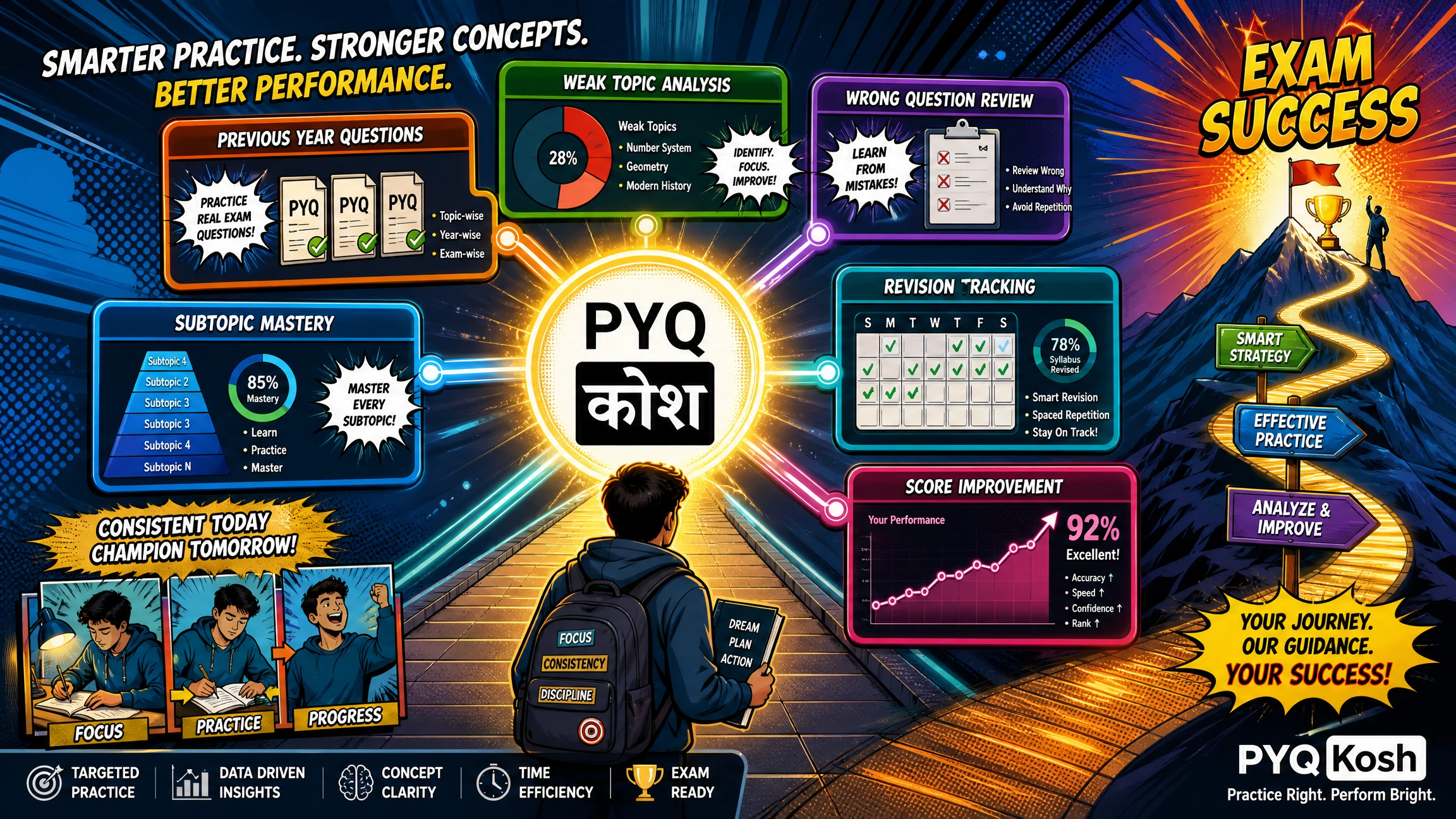
Instead of juggling 50 different folders, move to a platform that organizes everything for you. PYQKosh provides exactly this kind of structured, analytical exam preparation. It helps you move away from disorganized chaos and into a focused routine where every question you solve actually brings you closer to your uniform.
Decoding the 2026 Railway Exam Pattern
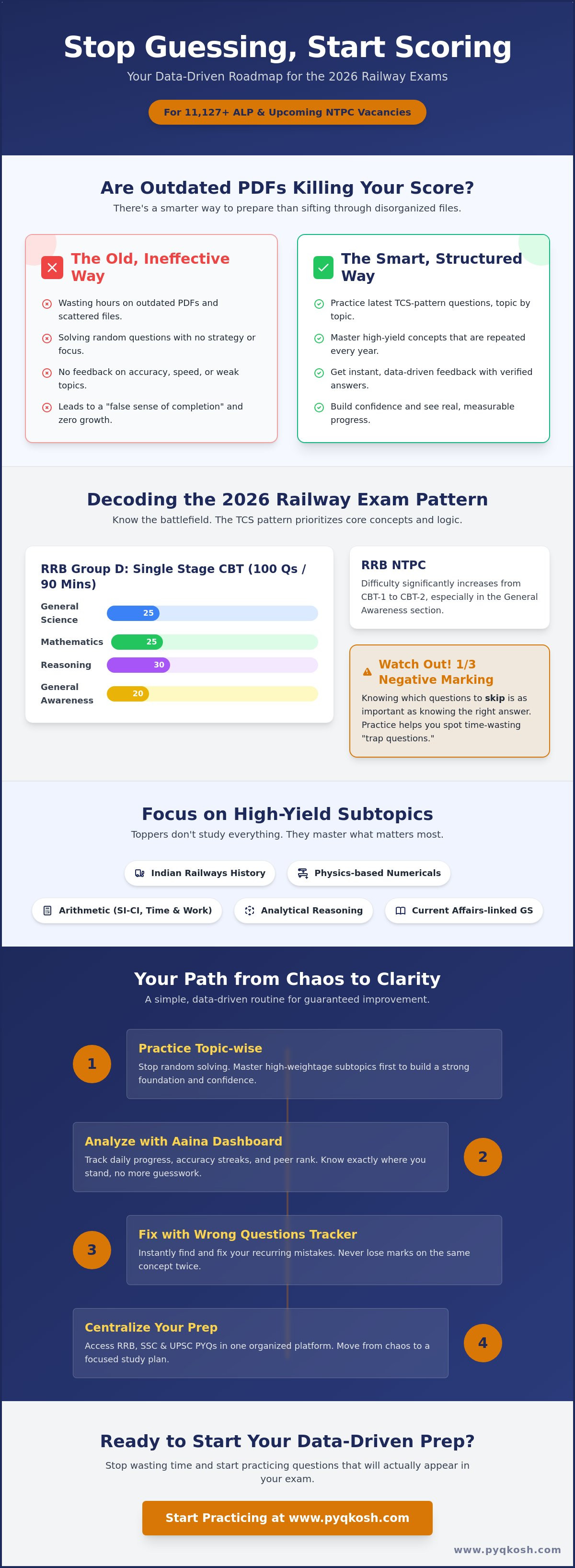
Yaar, the Railway pattern isn't a mystery if you look at the data. Whether you're targeting the 11,127 ALP vacancies or the massive NTPC recruitment, certain themes repeat every single year. The 2026 exams follow a strict TCS pattern that prioritizes logical reasoning and General Studies questions linked directly to current affairs.
The 1/3 negative marking is where most dreams die, dost. It's not enough to know the right answer; you must know which questions to skip. By analyzing Railway exam questions with answers from recent shifts, you'll start to recognize "trap questions" designed to waste your time and kill your accuracy. Toppers don't just solve everything; they solve the right things quickly.
Subtopic weightage is your secret weapon. If you know that Number Systems usually carry more weight than Geometry in Group D, you'll spend your energy where it actually counts. This data-driven focus is what separates a serious aspirant from the crowd of millions.
RRB NTPC and Group D Weightage
For RRB Group D, the pattern is now a single-stage CBT with 100 objective questions. You get 90 minutes to tackle 25 Science, 25 Maths, 30 Reasoning, and 20 General Awareness questions. In NTPC, the difficulty level shifts significantly between CBT-1 and CBT-2, especially in the General Awareness section.
2025-26 trends show a heavy tilt toward Analytical Reasoning and Science questions based on practical applications. Don't just memorize facts; understand how they apply to real-world scenarios. Staying updated with these recency trends is the only way to ensure your preparation stays relevant and sharp.
High-Yield Subtopics You Cannot Skip
Focus on "hot topics" like Indian Railways History, Physics-based numericals, and Arithmetic basics like SI-CI and Time & Work. These subtopics appear in almost every shift. Instead of solving full-length mocks immediately, start with subtopic-wise practice to build your core strength.
I suggest practicing these directly on the RRB NTPC exam page to see how questions have evolved. Subtopic-wise test analysis gives you a much clearer picture of your weak spots compared to a generic score. If you want to see where you truly stand, you can check your peer rank on the Aaina dashboard and adjust your strategy instantly.
Subject-Wise Railway Exam Questions with Answers
Yaar, solving a mixed bag of random questions is like trying to eat soup with a fork. It's frustrating and gets you nowhere. To actually see progress, you must break the syllabus down into subjects and specific subtopics that carry the most weight.
Mastering Railway exam questions with answers requires a focused attack on the high-yield areas first. Instead of reading a 500-page textbook, look at what the Railway Recruitment Boards actually asked in the last three years. This data-backed approach saves you from the "syllabus paralysis" that stops most aspirants.
I always tell my juniors that the secret isn't just knowing the answer; it's knowing the logic behind it. When you practice subject-wise, your brain starts recognizing patterns. You'll notice that RRB has a "crush" on certain topics, repeating the same logic with different numbers year after year.
Maths and Reasoning: Speed is King
In the 2026 exams, you won't have time to think about formulas from scratch. Solving PYQs in "Test Mode" is the best way to build real exam speed under pressure. It forces you to manage the clock while maintaining accuracy, which is exactly what happens in the actual CBT.
The real value comes from in-depth explanations that cover common confusion points. If you get a Syllogism question wrong, don't just look at the right option. Read the explanation to understand why the other options were incorrect. Use the Bookmark tab to save tough logic-based questions so you can revise them 48 hours before the exam.
General Awareness and Science Mastery
General Science is the backbone of the Group D and ALP exams. Focus on Physics and Chemistry concepts that RRB loves to repeat, especially numericals related to work, power, and energy. Don't just memorize; understand the application to avoid negative marking.
The "Booster Tips" in quality explanations are a goldmine. They often help you learn three extra facts per question, effectively tripling your study efficiency. I recommend sorting topics by question count to find the highest-yield areas first, so you don't waste time on subtopics that only appear once in five years.
For the 2026 updates, check the Current Affairs section daily. Link these updates to static GK by exploring specific Current Affairs Topics that are trending. This dual-focus strategy ensures you're ready for both the traditional and the modern TCS-pattern questions.
Try practicing a few sets on the RRB NTPC exam page to see how your speed improves when you focus on one subtopic at a time.
How to Analyze Your Performance Using the Aaina Dashboard
Practice is useless if you don't know where you're failing, dost. You can solve a thousand Railway exam questions with answers, but if you keep making the same silly mistake in Time and Work, you're just running in circles. Blind practice feels like hard work, but it doesn't lead to selection.
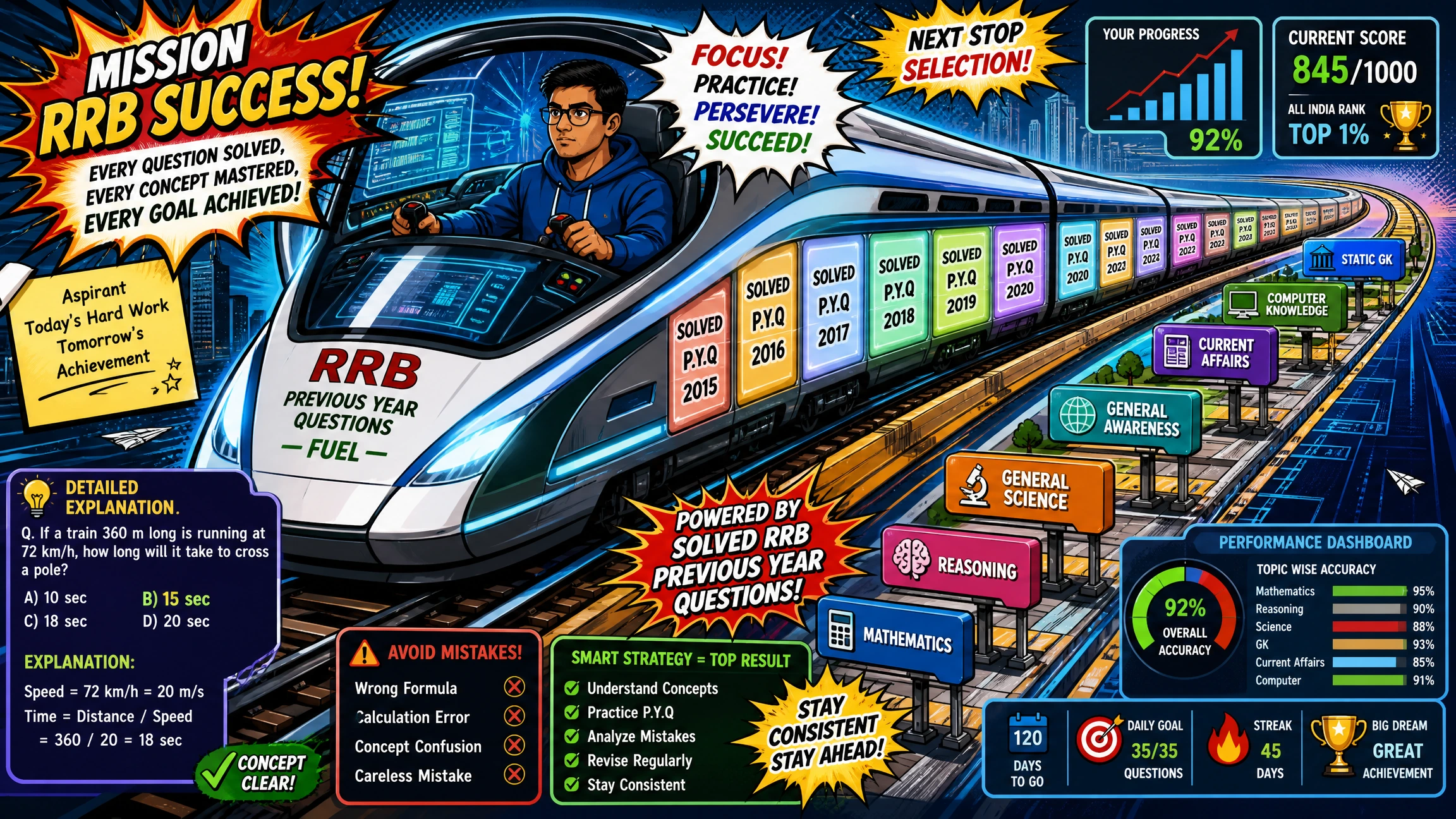
The Aaina dashboard acts like a mirror for your preparation. It tracks your accuracy, daily practice streaks, and exactly how many questions you've tackled. It transforms your disorganized effort into a structured, analytical exam preparation routine that shows your real progress.
Analyze your peer rank to see where you stand in the national competition. Knowing you're in the top 10% of aspirants practicing for RRB ALP gives you a massive confidence boost. It replaces your anxiety with a clear, data-driven goal to reach the top of the leaderboard.
The Power of the Wrong Question Tracker
Stop highlighting mistakes in heavy books you'll never reopen. The Wrong Question tab automatically stores every slip-up you make during practice. You can sort these by frequency to identify "habitual" errors that are draining your marks shift after shift.
I suggest you re-attempt these wrong questions every 3 days. This smart method beats re-reading an entire textbook because you're only fixing what's actually broken. It ensures that once you make a mistake, you never repeat it in the actual exam hall.
Tracking Subtopic-Wise Progress
A weekly graph helps you monitor if your accuracy is actually going up or if you're plateauing. Use "Practice Mode" when you're still learning a concept and need the in-depth explanations. Once you feel ready, switch to "Test Mode" to evaluate your speed under real exam pressure.
To get full access to these deep performance insights and the Aaina dashboard, you can check out the Pricing Plans. It's a small investment to move from random guessing to a focused, winning strategy. Stop guessing your level and start measuring it today.
Ready to see your real rank? Start your analytical practice now and fix your mistakes before the exam date arrives.
Master Railway Job Questions with PYQKosh
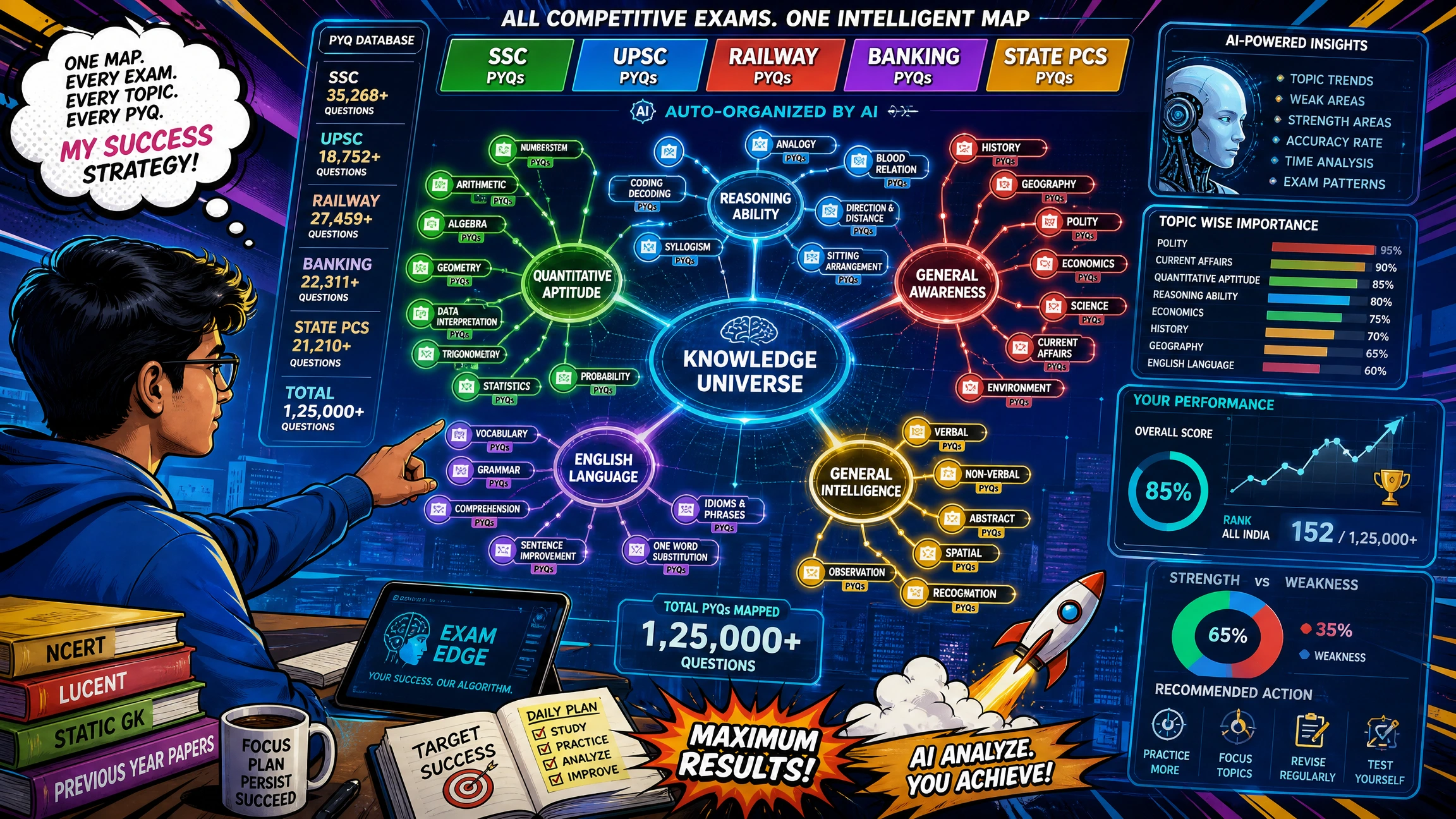
Yaar, the days of hunting through Telegram for the right PDF are over. PYQKosh centralizes over 100,000 questions from SSC, UPSC, and Railways into one organized platform. You don't need to download 50 different files to find high-quality Railway exam questions with answers anymore.
Every question comes with in-depth explanations that do more than just show the right option. They clarify exactly why an answer is correct and why the others are wrong. This level of clarity is what helps you avoid those "silly mistakes" that cost you a seat in the final merit list.
Start your journey by picking your specific target on the Exam Selection page. Whether it is ALP, Group D, or NTPC, having all these resources in one place keeps your mind clutter-free and your preparation focused on what actually matters.
Why Toppers Trust Subtopic-Wise Practice
Topper banne ka shortcut is simply following the "work smarter, not harder" philosophy. By focusing on subtopic-wise practice, you ensure that every minute you spend studying actually improves your score. This method is much more effective than solving random full-length mocks before you've mastered the basics.
This "work smarter" philosophy is the same reason why large organizations don't handle complex tech changes alone; they rely on SAP implementation partners to ensure their systems are optimized for the highest performance.
The platform is completely mobile-friendly, so you can practice during your commute or even a quick 10-minute tea break. Consistency is the only way to win this race. Use the daily streaks feature to keep yourself accountable and watch your confidence grow as your accuracy improves.
Ready to Clear the 2026 Railway Exam?
Your dream of a secure Railway job is just a structured plan away. Don't let the massive competition scare you; most people are still practicing the old, disorganized way. By using a data-driven approach, you're already ahead of 90% of the aspirants out there.
I suggest you start with a few free subtopics on the RRB NTPC page to feel the difference for yourself. Once you see your progress on the Aaina dashboard, you'll never go back to those messy PDFs. Take that first step toward your selection today.
Go ahead and practice your first set of subtopic-wise questions now.
Take Control of Your Railway Career Today
You've seen why old PDFs are a trap and how a subtopic-wise focus changes the game. Clearing the 2026 exams isn't about luck; it's about using a structured, analytical exam preparation strategy that highlights your weak spots before the examiner does. Precision beats volume every single time.
Mastering Railway exam questions with answers is the single most effective way to jump ahead of the millions of other aspirants. With access to 100,000+ topic-wise PYQs and in-depth explanations that cover both right and wrong choices, you're no longer practicing in the dark. You'll finally understand the logic behind every solution and avoid those costly "silly mistakes."
Use the Aaina progress dashboard to keep your daily streaks alive and stay motivated throughout your journey. Your dream of a Railway uniform is within reach if you just stop guessing and start measuring your actual progress every day. I'm rooting for you, dost; go get that selection!
Start your subtopic-wise Railway practice on PYQKosh today!
Frequently Asked Questions
Where can I get Railway exam questions with answers for free?
Yaar, you can find several free Railway exam questions with answers by starting with the trial subtopics on PYQKosh. Most free PDFs on Telegram are unorganized and lack reliable explanations. Starting with a verified, centralized source saves you from learning incorrect facts and wasting time on outdated patterns. It's much safer to use a platform that categorizes questions by subtopic so you can focus on selection.
Are previous year questions enough to crack the RRB NTPC 2026 exam?
PYQs are definitely enough if you treat them as a learning tool rather than just a test. Topper banne ka shortcut isn't a secret; it is just mastering the subtopics the RRB repeats every year. If you master every concept through structured, analytical exam preparation, you won't need to hunt for extra theory books or expensive coaching materials to clear the exam.
How can I track my accuracy while practicing Railway PYQs?
Dost, the Aaina dashboard is designed specifically to solve this problem by showing your live accuracy for every session. It tracks your progress at the subtopic level so you can see if you're actually improving. Keeping your daily practice streaks alive on the dashboard ensures you stay consistent and focused until the actual exam date arrives at your center.
Which subtopics have the highest weightage in Railway General Science?
Physics numericals related to motion, power, and energy usually have the highest weightage in RRB exams. In Chemistry, focus on the periodic table and common chemical reactions. Use the sorting feature on your practice platform to organize topics by question count; this helps you prioritize high-yield areas that appear most frequently in recent TCS-pattern papers from the last few years.
Can I practice Railway and SSC questions on the same platform?
Absolutely, you can practice for both Railway and SSC exams on the same centralized platform. PYQKosh hosts over 100,000 PYQs across SSC, Railway, Defence, and UPSC categories. This centralization makes it easy to switch your focus without losing your progress tracking or having to manage multiple disorganized question banks at the same time during your preparation journey.
What is the best way to handle negative marking in Railway exams?
The most effective way to beat negative marking is to build a "skipping habit" by practicing in Test Mode. Use the in-depth explanations to understand why you're making mistakes. If you find yourself guessing often, the Aaina dashboard will show a dip in accuracy, signaling that you need to go back and master that specific subtopic before moving forward again.
How does the Wrong Question tracker help in revision?
The Wrong Question tracker automatically saves every mistake you make so you can review them later without manual effort. You can sort these errors by frequency to see which concepts you consistently fail to grasp. Re-attempting these specific questions every three days is the most efficient way to turn your weaknesses into strengths without re-reading entire textbooks over and over.
Is the 2026 Railway exam pattern different from previous years?
The 2026 pattern follows the modern TCS-led structure, which is more analytical and logic-heavy than older exams. A major update is that RRB Group D is now a single-stage CBT again. Focus on 2025-26 recency trends and practice Railway exam questions with answers from the last three years to stay relevant and prepared for the actual difficulty level.
Start your journey to a Railway job by practicing a few subtopic-wise sets right now.