

Article by
Aaisha
A passionate content writer at PYQKosh focused on simplifying Current Affairs and PYQs for competitive exam aspirants. I love turning complex topics into easy, student-friendly content that helps learners prepare smarter and stay consistent in their exam journey.
The 2023 Prelims paper didn’t just change the rules; it burned the old playbook entirely. Many aspirants watched their years of “elimination technique” practice disappear in a single morning. It’s frustrating to feel like the logic you’ve mastered no longer works against the new statement-based format.
You probably feel overwhelmed by those “Only one, Only two” questions and tired of scrolling through bulk PDFs that don’t help you improve. This upsc prelims 2023 question paper analysis will help you turn that fear into a solid strategy for your 2026 rank. You’ll learn how to handle the shift toward conceptual depth without losing your mind.
We’ll break down why the pattern changed and how you can use these specific PYQs to your advantage. I’ll show you how to move from random guessing to subtopic-wise mastery and data-driven practice. Let’s stop the guesswork and start building a preparation style that actually survives the exam hall.
Key Takeaways
- Understand why the old elimination tricks failed and how to build the conceptual depth you need for the 2026 attempt.
- Get a detailed upsc prelims 2023 question paper analysis to see why subjects like Environment and Polity are now your biggest scoring areas.
- Learn the strategy to beat the “Only One, Only Two” statement trap by focusing on subtopic-wise clarity instead of random guessing.
- Discover how to use the “Aaina” dashboard and wrong questions tracker to turn your 2023 mistakes into strengths.
- Find out how to practice the 2023 paper in “Test Mode” to build the speed and pressure-handling skills required for the real exam.
Why the UPSC Prelims 2023 Question Paper Changed Everything
Remember that feeling when you opened the 2023 paper? It wasn’t just a tough day. It was the day the old tricks died. Yaar, those “elimination hacks” that seniors used to swear by just didn’t work. UPSC proved that it wants depth, not just shortcuts.
This upsc prelims 2023 question paper analysis highlights a massive shift in the exam’s DNA. The paper moved from “Which of these” to “How many of these.” This tiny change in wording destroyed the safety net for thousands. You can’t just find one wrong statement and win anymore.
The Civil Services Examination (CSE) is evolving rapidly. If you are preparing for 2026, ignoring the 2023 trend is like walking into a trap with your eyes closed. You need to change your study habits right now to survive the new pattern.
The Death of the Elimination Technique
UPSC removed the “Option A and B” safety net entirely. In the past, if you knew statement 1 was wrong, you could often find the right answer. Now, with the “Only one, Only two” format, you must know the status of every single statement. There’s no middle ground.
This requires a huge psychological shift. You can’t rely on a “vibe” or intuition in the exam hall. You need absolute certainty. This is why subtopic-wise practice is the only way forward. You have to go deep into every subject to stay safe from these statement traps.
Why 2023 is Your Best Guide for 2026
UPSC patterns repeat in themes even if the framing changes. The 2023 paper is your best benchmark. It tells you exactly where your preparation stands today. Are you still stuck in the old way of thinking? Or can you handle the new pressure of statement-heavy questions?
Avoid the “PDF trap” where you just read through bulk questions without solving them. Start active recall. Use PYQKosh to solve the 2023 paper in Test Mode. It is the best way to feel the actual exam pressure from your mobile screen.
Check your progress on the Aaina dashboard. It shows you exactly which subtopics are making you trip up. If you keep getting the “Only one” questions wrong, the wrong questions tracker will help you fix those specific gaps. Master these patterns now so you don’t panic in 2026.
Subject-Wise Weightage: Where Did UPSC Focus in 2023?
If you felt like the 2023 paper was a bit “out of syllabus,” you aren’t alone. But when we look at the numbers, a very clear pattern emerges. This upsc prelims 2023 question paper analysis shows that UPSC is moving away from the predictable “safe” subjects of the past.
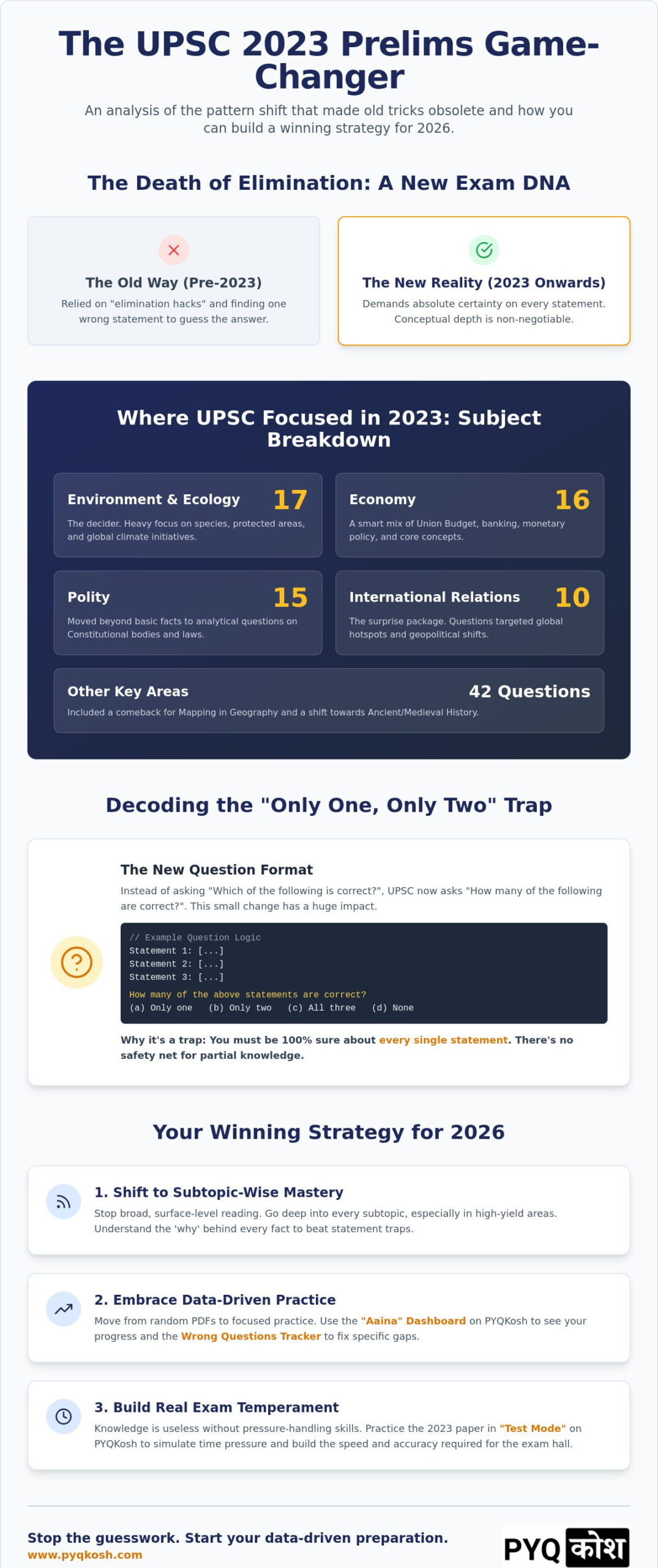
Environment and Ecology took the crown with 17 questions. That is nearly one-fifth of the entire paper. If you haven’t mastered your mapping and core ecology concepts yet, you are leaving your 2026 rank to chance. It is no longer a side subject; it is the decider.
Economy and Polity remained the reliable pillars with 16 and 15 questions respectively. They saved many aspirants who had their basics strong. However, even these static subjects had a twist. You needed more than just a surface-level reading of standard textbooks to get through.
The High-Yield Subjects of 2023
- Environment (17 questions): UPSC focused heavily on species, protected areas, and global climate initiatives. You needed to know the “where” and “why” behind every location.
- Economy (16 questions): This was a smart mix of the Union Budget and core NCERT concepts. Questions on banking and monetary policy required you to think like an economist, not just a student.
- Polity (15 questions): While Laxmikanth remains the bible, the 2023 paper asked for deeper analytical thinking on Constitutional bodies and legal provisions.
Surprises in International Relations and Geography
International Relations was the real surprise package with 10 questions. It wasn’t just about which leader met whom. UPSC targeted specific global hotspots and geopolitical shifts. If you ignored the news about Africa or the Middle East, you likely struggled here.
Mapping questions also made a huge comeback. Your Atlas is now your best friend. You must be able to visualize borders, rivers, and conflict zones instantly. You can use UPSC CSE PYQs to see exactly how these mapping questions are framed and practice them subtopic-wise.
History saw a shift too. Art and Culture took a backseat while Ancient and Medieval history came to the forefront. This means you can’t skip the “boring” chapters anymore. Every era now carries the potential for a high-weightage surprise.
Don’t let these shifts catch you off guard in 2026. Start tracking your subject-wise accuracy on the Aaina dashboard to see where you stand against the 2023 standards. It is the best way to move from disorganized chaos to a focused, data-backed study plan.
Decoding the ‘Only One, Only Two’ Statement Trap
The “Only one, Only two” format was the biggest shocker of the year. Our upsc prelims 2023 question paper analysis shows that over 47 questions used this “How many” framing. This isn’t just a change in words; it is a total blockade against your old guessing habits.
In the past, you could eliminate two options and take a 50-50 risk. Now, if you don’t know even one statement, you are stuck. Guessing has become a dangerous game that leads straight to negative marking and a lost year.
UPSC is forcing you to move from factual memory to analytical reasoning. You can’t just mug up facts; you need to understand the “why” behind them. A practical tip is to look for “absolute truths” versus “relative truths” while reading statements. Absolute facts rarely change, but relative data like percentages often contain traps.
Why Conceptual Clarity is Now Non-Negotiable
Success in Prelims no longer comes to those with half-knowledge. UPSC now tests your depth in specific subtopics like the working of a “Central Bank” or the history of “Buddhist sites.” Yaar, you can’t just skim the surface and expect to pass.
To survive 2023-style papers, you must master every subtopic so thoroughly that no statement can confuse you. This is why practicing subtopic-wise is the only way to build that confidence. It turns your confusion into organized clarity before you hit the exam hall.
High-Yield Themes You Must Master
When studying Government Schemes, don’t just stop at the name of the Ministry. UPSC now asks about the specific beneficiaries and long-term goals. Similarly, in Science and Tech, focus on practical applications like Green Hydrogen rather than just the basic theory.
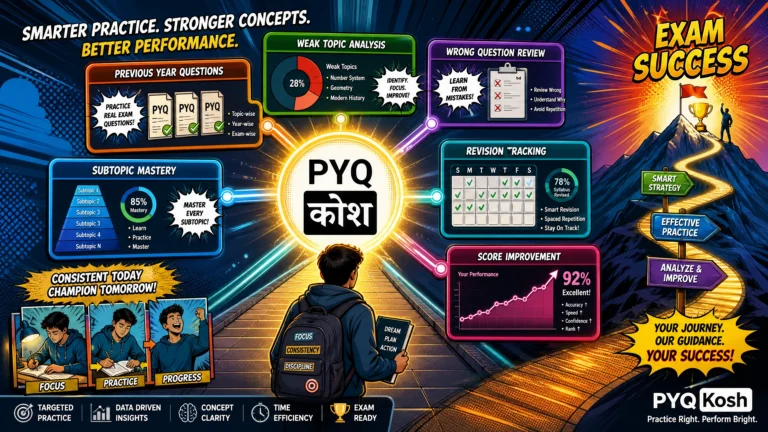
Link these 2023 themes to your 2026 UPSC PYQ practice plan. Use the wrong questions tracker on PYQKosh to see which statement types always trip you up. If you keep failing at “How many” questions, filter them by subtopic and practice until your accuracy improves on the Aaina dashboard.
How to Practice 2023 PYQs Without Wasting Time
Spent hours scrolling through a 100-page PDF analysis? Yaar, that is just passive reading. It will not help you when the clock is ticking and you are sweating in the exam hall.
To master this new pattern, you need a structured plan. This upsc prelims 2023 question paper analysis strategy is about doing the hard work now so the actual exam feels like just another practice session. Follow these five steps to prepare effectively.
- Step 1: Break the 2023 paper into subject-wise segments. Focus on one subject at a time to avoid confusion.
- Step 2: Solve questions in “Test Mode.” You need to feel the 2023 pressure and manage your time against the statement-heavy questions.
- Step 3: Use subtopic-wise practice to fix weak areas immediately. If you fail at “President,” don’t just read the whole Polity book again.
- Step 4: Analyze why you got a “How many” question wrong. Was it a lack of fact or a failure in logic?
- Step 5: Revise your wrong questions every 3 days. Use the wrong questions tracker to keep them organized and accessible.
Why Subtopic-Wise Practice is the Secret
Don’t just solve “Polity” as a whole. Solve “Preamble” or “Parliament” specifically. This builds the muscle memory needed for complex statement questions. When you know a subtopic inside out, no trap can catch you.
Topper banne ka shortcut is simple. Master one subtopic at a time instead of trying to finish the whole book in one go. It turns a massive syllabus into small, manageable wins that keep you motivated.
Stop the PDF Obsession
Scrolling through bulk analysis PDFs is a waste of time. Active recall is what helps you in the exam hall. You need to practice, fail, and then understand the in-depth explanations to truly learn.
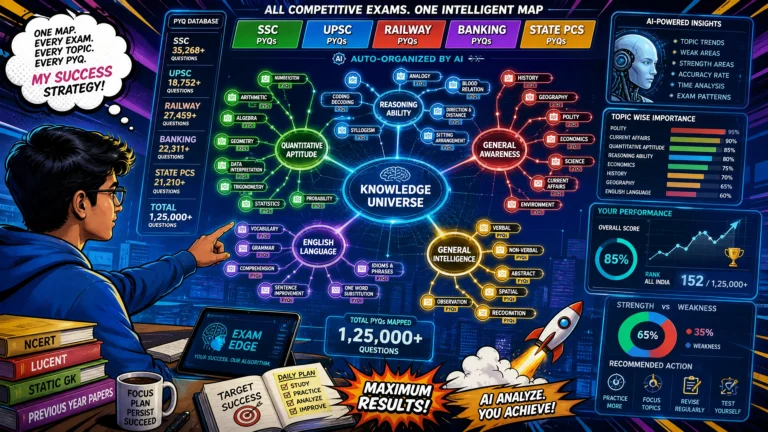
Use data-driven insights to track your accuracy per subject. The Aaina dashboard shows you exactly where you stand. It replaces disorganized chaos with focused clarity, showing you which subtopics need more work before 2026.
Start your journey toward a better rank by using structured, analytical exam preparation today.
Master the 2023 Pattern with PYQKosh Subtopic Practice
Making a mistake once is fine. Making it twice in the exam hall is a nightmare. This upsc prelims 2023 question paper analysis shows that statement-heavy questions are here to stay, so you need a tool that helps you learn from your errors.
PYQKosh gives you the 2023 paper broken down into subjects and subtopics. You don’t have to search through a massive PDF to find all the Environment questions. They are already sorted and ready for you to solve on your mobile screen whenever you have five minutes.
You can also bookmark high-yield 2023 questions for quick revision. If a question on “Green Hydrogen” or “Central Banks” feels important, save it. Revisit these bookmarked questions a week before the exam to keep the logic fresh in your mind without re-reading entire textbooks.
The Aaina Dashboard: Your Real-Time Progress
The Aaina dashboard acts like a mirror for your preparation. It shows your daily streaks and peer rank for UPSC practice. Seeing where you stand compared to other aspirants keeps you motivated and honest about your daily effort.
It helps you identify if you are struggling with “Environment” or “History” specifically. Structured practice beats random guessing every time. When you see your accuracy dipping in a specific subtopic, you know exactly where to put more effort to save your rank.
Tracking your progress at the subtopic level ensures you don’t leave any gaps. You can see your accuracy graph for the week and adjust your study plan. This move from disorganized chaos to data-backed clarity is what separates toppers from the rest.
Fixing Mistakes with the Wrong Question Tracker
The “Wrong Question” tab is a total game changer for statement-based questions. It automatically stores every question you get wrong. You can sort these 2023 mistakes by frequency to see which concepts are causing deep-seated confusion in your mind.
Yaar, don’t just read the explanation once and forget it. Practice these 2023 questions in both “Practice” and “Test” modes at PYQKosh. Practice mode lets you see in-depth explanations immediately, while Test mode builds your speed and accuracy under real exam pressure.
The in-depth explanations cover both right and wrong answers. They also include exam booster tips and confusion points to help you understand the “How many” logic better. Use this wrong questions tracker to turn your weakest subtopics into your strongest scoring areas before 2026.
Go to the app and start your subject-wise practice now.
Secure Your 2026 Rank with Strategic Practice
The 2023 paper changed the game, but it doesn’t have to be your roadblock. This upsc prelims 2023 question paper analysis proves that conceptual depth is your new superpower. Stop chasing shortcuts and start building a foundation that UPSC can’t break.
You have the roadmap now. Focus on high-yield themes like Environment and Polity, and use the Wrong Question tracker to fix every mistake. With over 100,000 topic-wise PYQs at your fingertips, you can turn every doubt into a strength.
Keep an eye on your Aaina progress dashboard to stay ahead of the competition. Consistency is the only topper banne ka shortcut that actually works. You’ve got the drive; now use the right tools to cross the finish line.
Start practicing UPSC 2023 questions subtopic-wise on PYQKosh today!
Believe in your hard work and keep pushing forward, yaar!
Frequently Asked Questions
Was the UPSC Prelims 2023 question paper the hardest ever?
Yes, many experts and aspirants consider it one of the toughest papers in the history of the exam. The difficulty didn’t just come from the questions, but from the new “Only one, Only two” option format that killed traditional guessing.
This upsc prelims 2023 question paper analysis shows that the mental pressure was much higher because you had to be certain about every single statement. It was a brutal reality check for everyone relying on shortcuts.
How many questions from the 2023 Prelims were based on current affairs?
Direct current affairs questions were relatively fewer, but around 35 to 40 questions had a strong link to recent events. UPSC is now merging current news with static topics, especially in subjects like Environment and Science & Tech.
You can’t just read a monthly magazine and expect to pass anymore. You need to understand how a news event connects back to the core syllabus to handle these integrated questions effectively.
Can I still use elimination techniques for UPSC 2026?
Honestly, yaar, the old “find the extreme word” tricks are mostly failing now. While some logic still applies, you can’t use them as a primary strategy for the 2026 attempt.
UPSC has replaced the safety net of “Option A and B” with statement-heavy traps. You now need deep conceptual clarity for every point. Focus on knowing the facts rather than looking for a way to skip them.
What was the cut-off for the UPSC Prelims 2023 paper?
The official cut-off for the General category was 75.41 marks, which is the lowest in recent years. This record low score proves just how much the new pattern impacted even the most prepared aspirants.
When the cut-off drops this low, it means accuracy matters more than the number of questions you attempt. One wrong guess in the “How many” format can easily pull your score below the line.
How should I use the 2023 PYQs for my 2026 preparation?
Treat the 2023 paper as your benchmark for the maximum difficulty level. Don’t just solve it once; break it down into subtopics to see which areas like Geography or Polity make you trip up.
Use the upsc prelims 2023 question paper analysis to identify your weak spots. Practice these specific questions in Test Mode on PYQKosh to build the stamina needed for statement-heavy papers.
Which subjects had the most weightage in the 2023 Prelims?
Environment led the paper with 17 questions, followed closely by Economy with 16 and Polity with 15. These three subjects alone made up nearly half of the entire question paper.
International Relations was the big surprise with 10 questions, mostly focused on global hotspots and mapping. If you want to score high, you can’t afford to ignore these high-yield subjects anymore.
Is it enough to solve only the 2023 UPSC question paper?
No, solving just one year is never enough. While 2023 shows the new trend, you need to practice at least the last 10 years to understand the core themes that UPSC loves to repeat.
Use multi-exam support to practice similar high-level questions from other exams too. This builds a wider knowledge base and helps you handle different types of statement framing without panicking.
How does subtopic-wise practice help in statement-based questions?
It stops you from getting overwhelmed by the massive syllabus. By mastering one small part like “Parliament” or “Climate Change” specifically, you gain the confidence to handle any statement UPSC throws at you.
When you practice subtopic-wise, you see every possible way a question can be framed. This builds the muscle memory needed to spot traps in “Only one” or “Only two” questions instantly.