

Article by
Aaisha
A passionate content writer at PYQKosh focused on simplifying Current Affairs and PYQs for competitive exam aspirants. I love turning complex topics into easy, student-friendly content that helps learners prepare smarter and stay consistent in their exam journey.
What if I told you that solving 25 years of UPSC papers is actually a waste of your time? You’ve likely spent hours scrolling through massive, messy PDFs, feeling more confused than when you started. It’s frustrating to finish a 100-page document and still not know which specific subtopics will actually show up in 2025. That’s exactly why you need a dedicated upsc pyq analysis tool to cut through the noise.

I know the struggle of drowning in information while the exam date creeps closer. You want to study smart, not just hard. This article will show you how to stop guessing and start scoring by shifting to a structured, subtopic-wise approach. You’ll learn how to identify high-yield areas that the examiner loves, making your revision cycle twice as fast.
We’re going to break down how to use data-driven insights to build a rock-solid strategy. From tracking your mistakes to mastering repeat trends, here is your roadmap to total confidence for the upcoming Prelims.
Key Takeaways
- Stop wasting hours scrolling through messy PDFs and learn how to identify the specific subtopics that actually repeat in the exam.
- Discover why a dedicated upsc pyq analysis tool is the secret to finding “hot zones” like the Bhakti Movement instead of just reading broad subjects.
- Replace manual guesswork with digital tracking to get an instant, clear view of your preparation progress through the Aaina dashboard.
- Master a simple 4-step process to sort previous questions by frequency and recency, ensuring you focus on high-yield areas for 2025.
- Turn your mistakes into strengths by using a tracker that automatically stores and sorts your wrong answers for a faster revision cycle.
Table of Contents
Why your current UPSC PYQ analysis is failing you
Let’s be honest, yaar. You’ve probably spent hours solving random questions from a bulky year-wise book. You feel productive, but you aren’t actually moving the needle. Solving random papers without a specific plan is just "time-pass" bhai. You need to know exactly which areas the Union Public Service Commission (UPSC) is targeting right now.
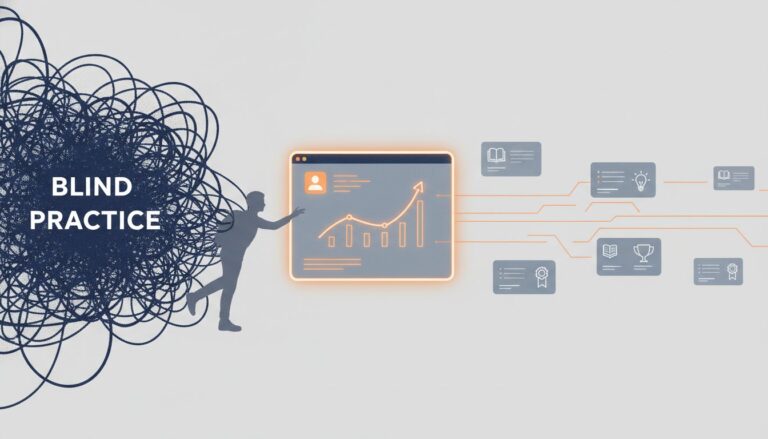
Most aspirants fall into the "Subject-wise" trap. Knowing that "Polity is important" doesn’t help when the examiner is shifting focus from Fundamental Rights to specific Constitutional Bodies. If you aren’t analyzing at the subtopic level, you’re flying blind. A smart upsc pyq analysis tool changes that by showing you the hidden patterns before you waste another week.
Manual analysis takes forever. You spend more time highlighting and sorting than actually practicing. By the time you finish mapping one subject, you’ve lost precious days that should have gone toward revision. You need a way to see the "hot zones" instantly so you can focus your energy where it actually counts.
The trap of the 500-page PDF
Telegram is full of 500-page PDFs that claim to be "topic-wise." But scrolling through them on a small phone screen kills your focus. You can’t search easily; you definitely can’t track your accuracy on a static page. It is a recipe for burnout and disorganized chaos.
Static papers don’t tell you if you’re getting better or worse at a specific subtopic like "Land Revenue" or "Bhakti Movement." Without a upsc pyq analysis tool, you’ll keep making the same mistakes. You need a system that remembers what you got wrong so you can fix it later.
Why 2026 aspirants need a data-driven approach
The exam pattern is changing every year. What worked in 2015 won’t work for the 2025-26 cycle. You need to see where you stand against your peers in real-time. Structured, analytical exam preparation is the only way to stay ahead of the competition.
Instead of guessing, use raw data to drive your mission. You need to know which subtopics have the highest question frequency recently. This helps you build a faster revision cycle and gives you total confidence in your strategy. Stop random PDF reading and start practicing on PYQKosh to see your progress clearly via the Aaina dashboard.
Actionable Tip: Pick one core subtopic today, like "Governor" in Polity, and solve all its PYQs from the last 10 years. Don’t touch the whole subject yet. Focus on the subtopic until your accuracy hits 80%.
Subject-wise vs. Subtopic-wise: The topper’s secret
If you ask a topper how they finished the syllabus, they won’t say "I read History three times." That’s a rookie mistake. UPSC doesn’t just ask about History; it asks about the Bhakti Movement, Land Revenue systems, or Temple Architecture. These are the real "hot zones" where the marks are hidden.
Most aspirants waste months trying to master every single page of a heavy textbook. But subtopic analysis reveals that many chapters are just fillers that UPSC hasn’t touched in a decade. By focusing on micro-topics, you can actually reduce your syllabus load by almost 40%. You’ll stop worrying about every minor detail and start mastering what actually appears on the OMR sheet.
This shift in mindset is the real topper banne ka shortcut. Instead of broad reading, you target specific themes. This way, your brain recognizes patterns faster during the actual exam. You aren’t just memorizing facts; you’re learning the examiner’s mind.
What is micro-level subtopic analysis?
Think of Polity as a giant mountain. It is intimidating. But when you break it down into Preamble, DPSP, and Local Bodies, it becomes manageable. When you look at the data, you might see that Local Bodies has had a question almost every year since 2015. That makes it a top priority for your 11th-hour revision.
This approach helps you rank topics by their strike rate. If a subtopic has zero questions in the last ten years, why are you spending three days on it? Spend that time on a high-yield area instead. You can start practicing subtopic-wise today to see these patterns for yourself without doing any manual work.
Benefits of a subtopic-wise UPSC PYQ analysis tool
Using a dedicated upsc pyq analysis tool saves you from the dreaded "Analysis Paralysis." You won’t stare at your books at 11 PM wondering where to begin. You’ll have a clear roadmap based on actual question counts and recency. It turns a chaotic pile of notes into a data-backed mission.
-
Skip low-yield chapters in heavy books like Laxmikanth or Spectrum.
-
Identify which specific themes the examiner is obsessed with in the 2024-25 cycle.
-
Build a revision schedule that focuses on your weakest high-yield subtopics first.
A upsc pyq analysis tool doesn’t just give you questions; it gives you clarity. It tells you exactly what to study next so you don’t feel overwhelmed. It’s about being a smart worker who knows which battles are worth fighting. Stop guessing and start targeting the subtopics that actually carry weight.
Static PDFs vs. Digital UPSC PYQ Analysis Tools
Stop collecting Telegram PDFs like they are medals, yaar. You probably have folders full of them that you’ve never opened. While they don’t cost money, they cost you something much more valuable: your time.
PDFs are static. They don’t talk back to you. You solve a question, scroll five pages to find the key, and then forget why you picked the wrong answer. It is a slow, painful way to study that kills your momentum.
A modern upsc pyq analysis tool changes the game. It turns your practice into a data-backed mission. You get instant results and a clear path forward without the manual headache of sorting through messy documents.
The cost of "Free" resources
Unorganized questions lead to scattered preparation. When your PYQs are scattered across 50 different files, you can’t see the big picture. You have no way to filter the specific questions you got wrong last time.
Most free PDFs also lack detailed explanations. You might find the right answer, but you won’t understand why the other three options were wrong. This gap in knowledge is where UPSC traps you during the actual Prelims.
Why digital tools are the future of UPSC prep
Digital tools give you instant feedback on every question you solve. You see your accuracy immediately. You can bookmark tricky questions and revisit them in one click via the bookmark tab on PYQKosh.
The "Aaina" dashboard acts as a mirror for your prep. It shows your daily streaks and peer rank, keeping you motivated. You stop marking "A, B, C" on rough paper and start building a digital history of your progress.
Sorting by "recency" is also much better than sorting by "year." You need to know what the examiner is thinking in 2024 and 2025, not just what happened in 1998. A digital tool lets you prioritize the latest trends instantly.
Actionable Tip: Stop using rough paper for PYQs today. Use a digital tracker to store your "Wrong Questions" automatically. It will save you at least 2 hours of manual sorting every single week.
4 Steps to decode UPSC Prelims trends like a pro
Stop staring at your syllabus like it’s a monster you can’t beat. You need a system to break it down. Follow these four steps to turn your preparation into a targeted mission instead of a random guessing game.
Step 1: Pick a core subject. Start with heavy hitters like Economy or Geography. These subjects have clear subtopics that repeat often. Don’t try to finish the whole subject in one go; pick one sub-theme and stick to it.
Step 2: Sort by frequency. Open your upsc pyq analysis tool and sort subtopics by question count. This immediately shows you which areas the examiner is obsessed with. If "Inflation" has 15 questions and "Banking History" has 2, you know where to spend your energy.
Step 3: Use Practice Mode. Don’t just jump into tests. Solve questions in practice mode first. This allows you to read the in-depth explanations immediately after each attempt, helping you learn the logic while the question is fresh in your mind.
Step 4: The Sunday Ritual. Every Sunday morning, open your "Wrong Question" tab. Re-solve every single question you missed during the week. This is how you stop making the same mistakes and actually improve your accuracy over time.
Identifying high-yield themes
Pattern recognition is your biggest weapon. Look for subtopics that appear in at least 3 out of every 5 years. These are your "hot zones." Often, static questions have hidden links to current affairs trends from that year. You can find a detailed breakdown in this UPSC Prelims Analysis to see how 25 years of data reveals these repeating themes.
Mastering the explanation, not just the answer
Toppers don’t just care about the right option. They analyze why the other three options are incorrect. This is where a upsc pyq analysis tool becomes essential. Look for "Exam Booster" tips that give you extra context. Pay close attention to "Confusion Points" that highlight common traps. Mastering these details is what separates a serious aspirant from the crowd.
Ready to build your strategy? Start your structured practice today and see your accuracy climb.
How PYQKosh turns your UPSC prep into a data-backed mission
Forget the faltu AI hype that promises to predict the future. UPSC is too smart for a black box to outguess it. Instead of relying on vague predictions, you need a transparent upsc pyq analysis tool that gives you raw, structured data. PYQKosh doesn’t try to think for you; it gives you the insights to think for yourself.
Preparation becomes a mission when you stop guessing. By using a system built on actual exam patterns, you move from disorganized chaos to focused clarity. You’ll know exactly what to study, why to study it, and how much time to spend on it. It is about working smarter, not just harder.
The Aaina Dashboard: Your progress mirror
Preparation can often feel lonely and confusing. The Aaina Dashboard acts as your personal progress mirror. Every single day, you can track how many questions you practiced and see your real-time accuracy. It’s not just about the numbers; it’s about building a rock-solid habit. The daily streaks feature keeps you moving even on the days when your motivation is low.
Knowing where you stand in the competition is vital. The dashboard shows your peer rank, giving you a reality check on your current level. You can see your weekly progress through clear graphs. This organized clarity reduces anxiety and replaces it with the confidence that comes from disciplined improvement.
Why subtopic-wise practice is a game changer
Imagine reading a specific chapter on the Governor in your textbook and then immediately solving every PYQ related to it. That’s the power of topic-wise and subtopic-wise practice for UPSC CSE. You don’t have to wait for a full-length mock test to find your weak spots. You can fix them at the micro-level while the concepts are still fresh in your mind.
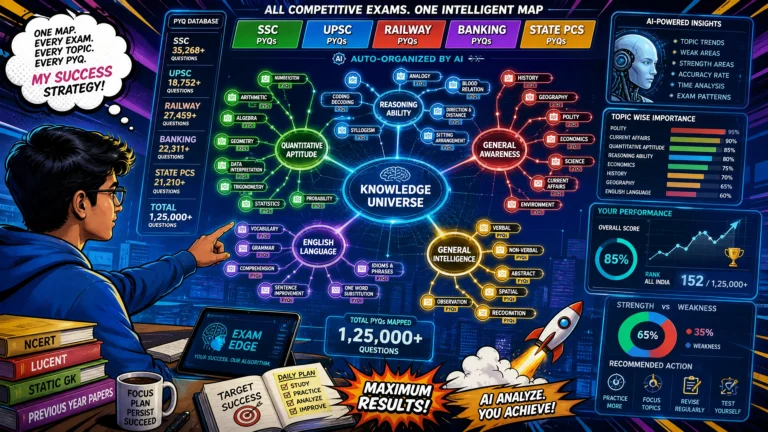
With a database of over 100,000 questions across multiple exams including SSC CGL, you have a massive resource at your fingertips. You can sort topics by question count to find the most important areas fast. This ensures you never waste time on low-yield areas that haven’t been touched in years. It is a structured, analytical exam preparation style that toppers swear by.
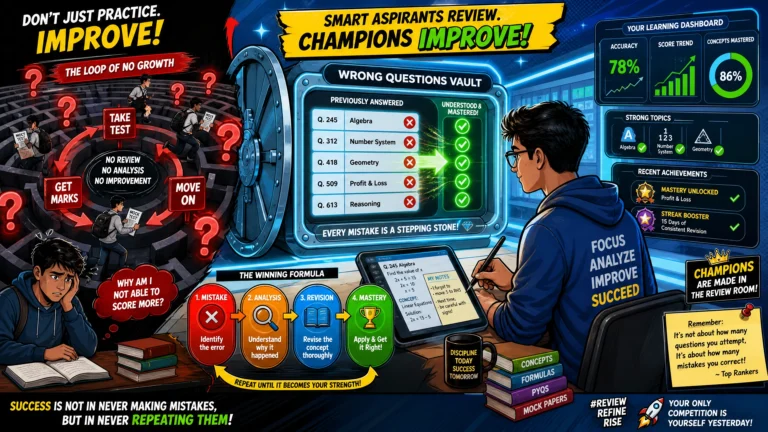
The Wrong Question Tracker is your ultimate weapon for the final weeks. It automatically stores every mistake you make. Instead of re-reading your entire book, you can just re-solve these specific questions. You can even sort them by how many times you got them wrong. It’s a foolproof way to ensure that a mistake made during practice never happens again on the final OMR sheet.
Start your journey toward a data-backed UPSC rank by practicing your first 10 questions today.
Take control of your UPSC 2025-26 strategy
Stop the guesswork, yaar. You’ve seen why random PDF reading is a trap and how subtopic mastery is the real topper’s secret. Success in Prelims isn’t about how many hours you sit with a book. It’s about how well you analyze the examiner’s mind and focus on the high-yield zones.
By using a dedicated upsc pyq analysis tool, you turn your preparation into a focused, data-backed mission. You get access to 100,000+ questions and subtopic-wise progress tracking that shows you exactly where you stand. The Aaina progress dashboard will keep you honest about your accuracy and daily streaks every single day.
Don’t let another day go by in disorganized chaos. It’s time to work smarter and build the confidence you need for the final OMR sheet. Start your data-driven UPSC practice on PYQKosh today and see the difference in your performance. You’ve got the potential; now you just need the right strategy. See you on the topper’s list!
Frequently Asked Questions
Is a UPSC PYQ analysis tool better than solving papers from a book?
Yes, it’s much better because books are static and can’t track your progress or sort questions by subtopic frequency. A digital upsc pyq analysis tool saves you from hours of manual work and shows your accuracy in real-time. Instead of flipping pages to check keys, you get instant feedback and data-backed insights to fix your weak areas faster.
How many years of PYQs should I analyze for UPSC Prelims 2026?
You should analyze at least the last 10 to 12 years to understand the core themes, but pay special attention to the last 5 years. The examiner’s mindset has shifted recently, so trends from the 2020 to 2025 cycle are more relevant for your 2026 attempt. Focus on subtopics that repeat in 3 out of every 5 years to find your "hot zones."
Can I use this tool for other exams like SSC or Railways too?
Yes, you can practice for multiple exams on the same platform without any confusion. PYQKosh supports UPSC, SSC, Railway, and other government exams with the same subtopic-wise depth. This is great if you’re targeting more than one exam, as it keeps all your practice data and progress tracking in one central place.
Does the tool provide explanations for both right and wrong answers?
Yes, every question comes with in-depth explanations that cover why the right answer is correct and why the others are wrong. You also get "Exam Booster" tips and "Confusion Points" to help you avoid common traps. This ensures you’re learning the logic behind the question, not just memorizing the answer.
How does the "Wrong Question" tracker help in UPSC revision?
The tracker automatically stores every question you get wrong so you don’t have to highlight them manually in a bulky book. During revision, you can sort these questions by frequency or recency to see which subtopics are still bothering you. Re-solving these specific mistakes on Sundays is the fastest way to hit 80% accuracy in your upsc pyq analysis tool.
What is the "Aaina" dashboard in PYQKosh?
The Aaina dashboard is your progress mirror that shows your daily practice stats, accuracy, and streaks. It also gives you a peer rank so you know exactly where you stand against other serious aspirants. It’s designed to replace confusion with organized clarity, making your improvement visible and measurable every day.
Can I practice subtopic-wise even if I am a beginner?
Absolutely, and it’s actually the best way for beginners to start their journey. Instead of being overwhelmed by a whole subject, you can practice small sub-themes like "Preamble" or "Rivers" as soon as you finish reading them in your textbook. This builds your confidence early on and ensures your foundation is based on actual exam patterns.
Is there a way to see the weightage of different subjects?
Yes, you can sort topics and subtopics by question count to see which ones have the highest weightage. This helps you identify high-yield areas instantly without doing any manual counting or guesswork. It’s a key feature that lets you prioritize your study time for the topics that actually carry the most marks.